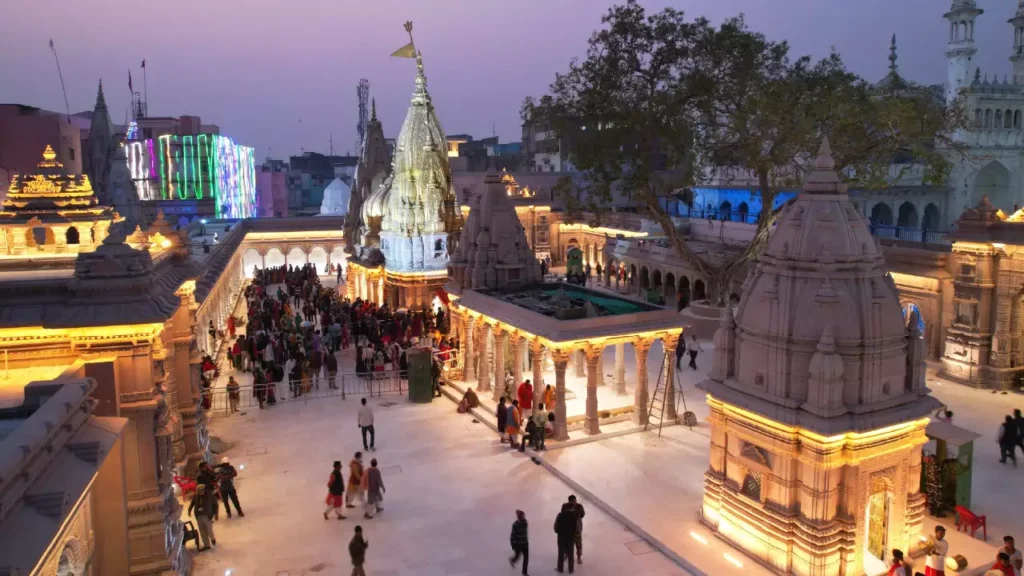
One of the Twelve Jyotirlingas
Kashi Vishwanath Temple is the most sacred Shiva shrine in India — one of the twelve Jyotirlingas, the self-manifested columns of divine light that represent Lord Shiva’s limitless form. Located in the heart of Varanasi, on the western bank of the Ganga, the temple has drawn seekers, saints, and pilgrims for thousands of years. The Jyotirlinga here is named Vishwanath, meaning Lord of the Universe, and the city itself is considered Shiva’s earthly abode. According to the Kashi Khand of the Skanda Purana, dying in Kashi is not a tragedy but a liberation — Shiva himself is said to whisper the Taraka mantra into the ear of every person who dies here, granting moksha.
History and Reconstruction Over the Centuries
The temple’s recorded history stretches back to at least the 11th century, though oral traditions and scriptures suggest a much older sacred site at this location. The original temple was demolished by Qutb ud-Din Aibak in 1194 CE, rebuilt, demolished again by Aurangzeb in 1669 CE — at which point a mosque was constructed on part of the site — and finally rebuilt in its current form between 1776 and 1780 CE by Maharani Ahilyabai Holkar of Indore. She funded the construction at her own expense as an act of devotion, and the temple that stands today carries her legacy.
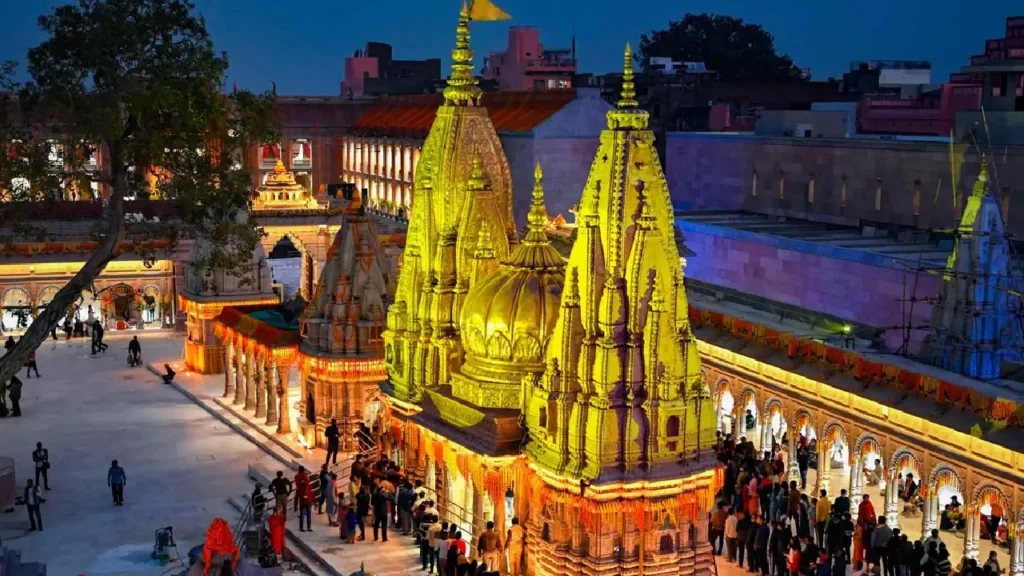
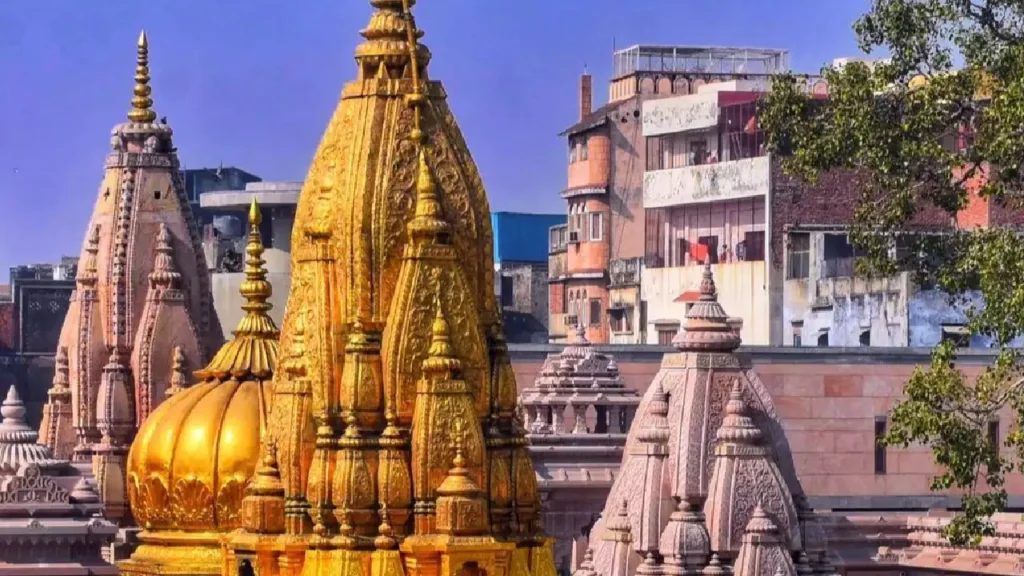
In 1835, Maharaja Ranjit Singh donated approximately 1,000 kg of gold to plate the temple’s two domes and the shikhara, which is why the temple is also called the Golden Temple of Kashi. A third dome was added later. The temple complex underwent a major transformation from 2019 onwards under the Kashi Vishwanath Corridor project, which opened in December 2021, directly connecting the temple to the Ganga ghats and creating a 50,000 sq ft ceremonial walkway.
The Jyotirlinga — Spiritual Significance
The presiding deity is Vishwanath, the Shivalinga enshrined in the garbhagriha. This linga is swayambhu — not crafted by human hands but self-manifested. Devotees perform abhishekam with water, milk, bilva leaves, and flowers, believing that a single darshan of Vishwanath dissolves the accumulated karma of countless lifetimes. The Shivalinga is approximately 60 cm tall and 90 cm in circumference, set in a silver altar.
The Dwadasha Jyotirlinga Stotra from the Shiva Purana names this linga first: “Saurashtre Somanatham cha Shrishaile Mallikarjunam… Varanasyam cha Vishwesham…” — listing Vishwanath among the twelve supreme manifestations of Shiva. For many Hindus, visiting all twelve Jyotirlingas is a life goal, and Kashi Vishwanath is considered the crown of that pilgrimage circuit.
Architecture and the Corridor
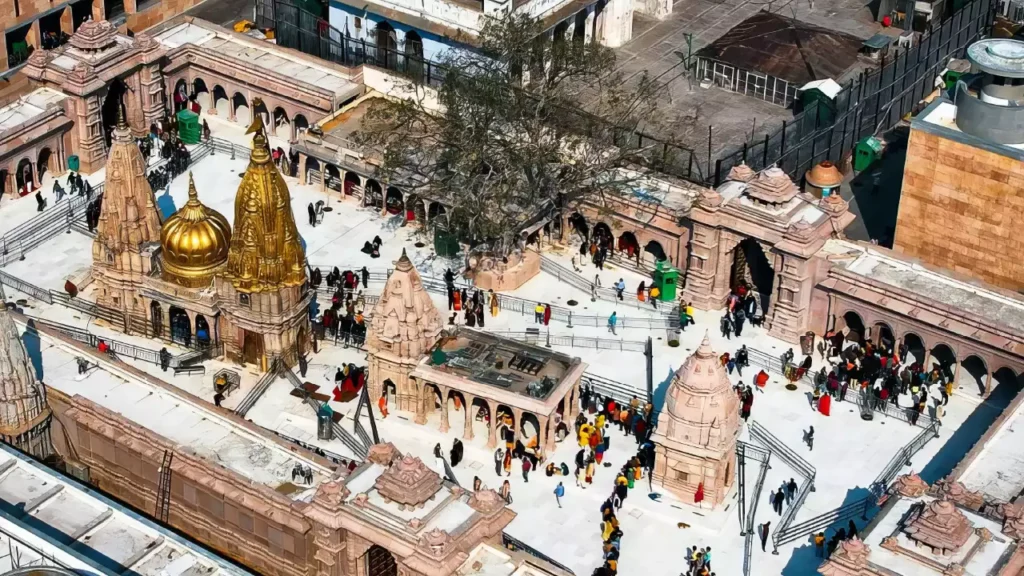
The main temple consists of a series of smaller shrines arranged around the central sanctum. The gold-plated shikhara rises prominently over the Vishwanath Lane and, since the corridor’s construction, is visible from the river ghats. Within the temple complex you will find shrines to Kala Bhairava (Kashi’s guardian deity), Dandapani, Avimukteshwara, Virupaksha, and the Annapurna Devi temple where the goddess is worshipped as the mother who feeds all of Kashi.
The Kashi Vishwanath Corridor stretches from the temple to Lalita Ghat and Manikarnika Ghat. Pilgrims can now walk directly from the river to the sanctum through a broad, paved promenade lined with sandstone pillars and small pavilions. The corridor also includes a museum dedicated to Kashi’s spiritual heritage and viewing galleries that offer a panorama of the ghat skyline.
Darshan Timings and Rituals
The temple opens at 3:00 AM for Mangala Aarti and remains open until 11:00 PM with periodic closures for ritual breaks. Five aartis are performed daily:
- Mangala Aarti: 3:00 AM – 4:00 AM
- Bhog Aarti: 11:30 AM – 12:00 PM
- Sandhya Aarti: 7:00 PM – 8:30 PM
- Shringar Aarti: 9:00 PM – 10:15 PM
- Shayana Aarti: 10:30 PM – 11:00 PM
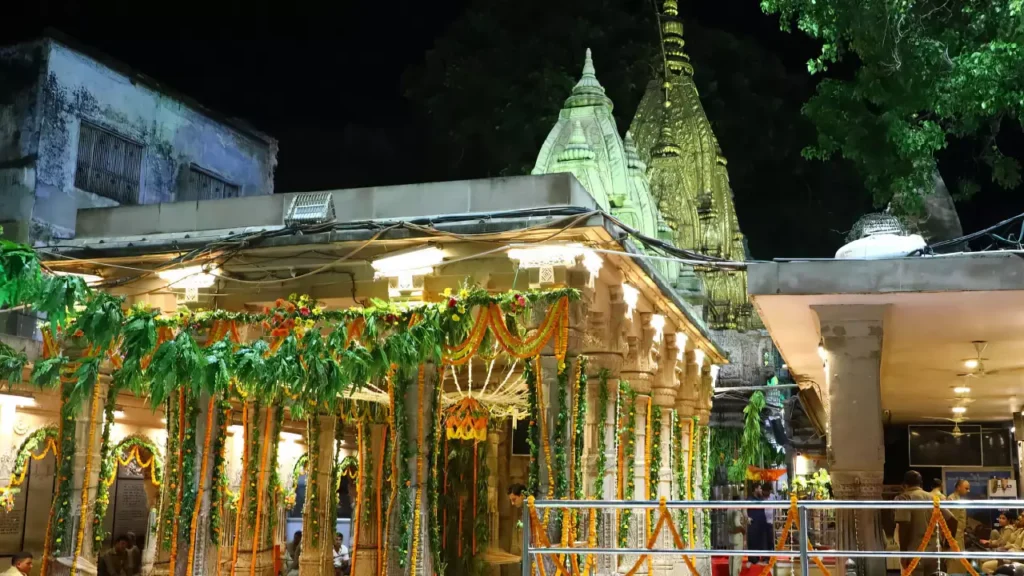
Rudrabhishek and special puja services can be booked in advance through the official temple trust portal. On Mahashivaratri, the temple observes a 24-hour darshan with massive queues. On Mondays (especially during Shravan month), crowds can swell to several lakh devotees in a single day, and the corridor helps manage the flow considerably better than earlier years.
How to Reach Kashi Vishwanath Temple
The temple is most beautifully approached from the Ganga ghats — walk up from Dashashwamedh Ghat or Lalita Ghat along the corridor. By road, the nearest landmark is Godowlia Chowk, from where the temple is a 10-minute walk through Vishwanath Lane (no vehicles allowed).
- By air: Lal Bahadur Shastri International Airport (Varanasi) is 26 km away
- By train: Varanasi Junction (Cantt) is 6 km; Kashi Station is 3 km
- By road: Varanasi is well-connected to Prayagraj (120 km), Lucknow (320 km), and Agra (570 km)
Nearby Temples and Sacred Sites
The area around Kashi Vishwanath is dense with sacred geography. Within walking distance you will find Annapurna Devi Temple (dedicated to the goddess of nourishment), Kala Bhairava Temple (the fierce guardian of Kashi), Sankat Mochan Hanuman Temple (associated with Tulsidas), Tulsi Manas Temple, and the Durga Temple at Durgakund. The Gyanvapi complex, adjacent to the main temple, houses the Gyaanvapi well — said to contain the original Jyotirlinga submerged to protect it from invaders.
A short walk leads to Manikarnika Ghat, Kashi’s eternal cremation ground where pyres burn without pause and where liberation from the cycle of birth and death is believed to be attained. For pilgrims, a complete Kashi yatra involves visiting these sites over two or three days.
Festivals at Kashi Vishwanath
Mahashivaratri is the temple’s grandest occasion, drawing hundreds of thousands of devotees from across India. The Shravan month (July–August) brings an unbroken stream of Kanvariyas — devotees carrying Gangajal on kavad poles from the Ganga to offer at the Jyotirlinga. Dev Deepawali in Kartik month transforms the ghats into a sea of lamps, and Kashi Navaratra draws devotees who walk the sacred Panchakroshi Yatra — a 88-km circumambulation of the city over five days.
Plan your visit to Varanasi with our detailed Varanasi travel guide. Book a complete pilgrimage on our Varanasi 2N/3D tour package. Further reading: Why Varanasi is called Kashi.