Rishikesh sits at the point where the Ganges emerges from the Himalayan foothills into the plains of Uttarakhand, roughly 25 km north of Haridwar and 43 km south of Badrinath Road Junction. The town has long been a centre for yoga, meditation, and Vedic study — a place where people come to learn, to heal, and to reset. Its reputation as the “Yoga Capital of the World” is not marketing; it is the accumulated weight of centuries of practice by saints, yogis, and scholars who chose this stretch of the Ganges as their home.
For pilgrims travelling to the Char Dham (Badrinath, Kedarnath, Gangotri, Yamunotri), Rishikesh is the traditional starting point — the place where yatris take a ritual dip at Triveni Ghat before heading into the mountains. For international travellers, it is the place that put Indian yoga on the global map when the Beatles arrived at Maharishi Mahesh Yogi’s ashram in 1968. Both of these identities — ancient pilgrimage gateway and global wellness destination — coexist here without much friction.
Triveni Ghat and the Evening Aarti
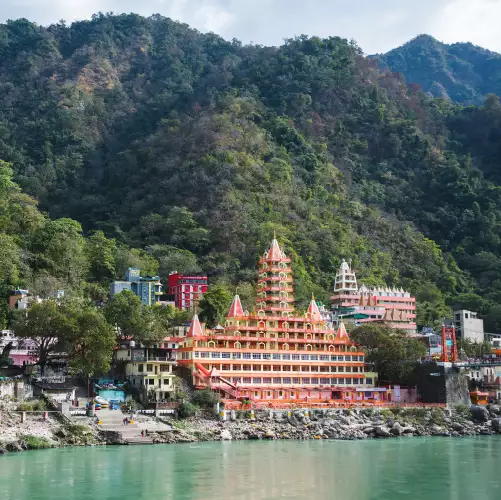
Triveni Ghat is the most important bathing ghat in Rishikesh, named for the confluence of the Ganga, Yamuna, and Saraswati rivers (the latter invisible). Every evening at sunset, a large Ganga Aarti ceremony takes place here — priests holding flame lamps perform rhythmic rituals to the sound of bells, conch shells, and devotional songs. The aarti at Triveni Ghat is smaller and more intimate than the grand Ganga Aarti at Har Ki Pauri in Haridwar, which can make it more moving for first-time visitors. The ghat is also used for early-morning dips, and in winter, sadhus can be seen bathing in the cold water as the mist rises from the river.
Fish in the Ganges at Triveni Ghat are considered sacred and devotees feed them flour balls — a ritual that has gone on for as long as anyone can remember. The ghat is about a 10-minute walk from the main bazaar area and easily accessible by auto-rickshaw or on foot.
Laxman Jhula and Ram Jhula
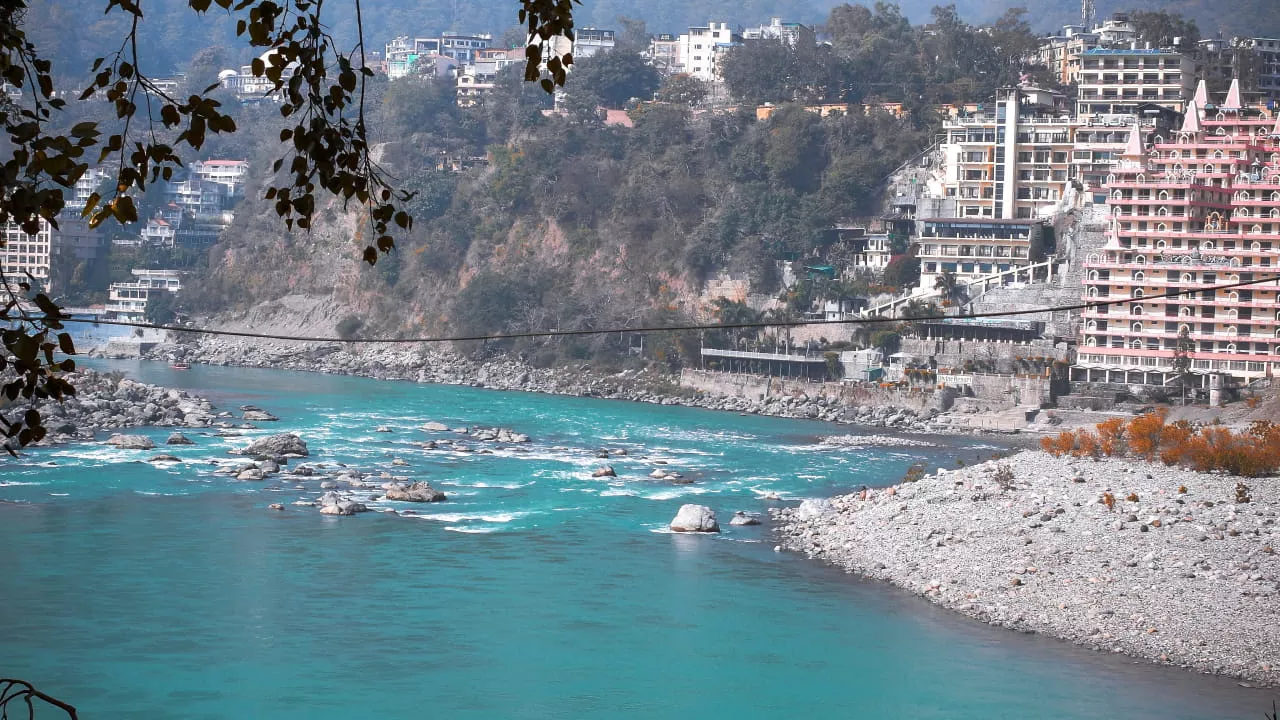
The two suspension bridges across the Ganges — Laxman Jhula and Ram Jhula — are among the most photographed landmarks in Rishikesh. Laxman Jhula, built in 1939 (replacing an older rope bridge), connects Tapovan on the east bank to Jonk on the west. A 13-storey temple dedicated to Triyuginarayan occupies the east approach of the bridge. Ram Jhula, a few kilometres downstream, connects Shivananda Nagar with Swargarohini Ashram and is slightly wider, making it easier to cross with a bicycle or small vehicle.
Note: As of 2023, the original Laxman Jhula pedestrian bridge has been closed for safety reasons. A new bridge is under construction close to the original site. Check the current status before planning a walk across it. Ram Jhula remains open and fully functional.
The neighbourhood around Laxman Jhula — a tangle of cafes, bookshops, crystal shops, yoga studios, and guesthouses — is where most backpackers and long-stay visitors base themselves. The area has a distinctive atmosphere: saffron-robed monks, Westerners in yoga clothes, local traders, and the occasional cow all share the same narrow lanes.
Yoga, Meditation, and Ayurveda
Rishikesh has hundreds of yoga schools and ashrams, ranging from one-day introductory classes to 200-hour and 300-hour Yoga Teacher Training Courses (YTTC) recognised by the Yoga Alliance. The range is genuinely wide — classical Hatha, Ashtanga, Iyengar, Kundalini, Yin, and Sivananda yoga all have established practitioners and schools here.
Some of the well-regarded schools and ashrams include:
- Parmarth Niketan — one of the largest ashrams in Rishikesh, located on the banks of the Ganges near Ram Jhula. It runs daily yoga classes, meditation sessions, and is the main organiser of the International Yoga Festival held every year in March. It also hosts the famous Ganga Aarti at its own ghat each evening.
- Sivananda Ashram — founded by Swami Sivananda, one of the 20th century’s most influential yoga teachers. The ashram maintains a rigorous daily schedule of sadhana and is open to visitors who wish to follow the routine.
- Yoga Niketan — a quieter, more traditional ashram offering month-long Hatha yoga courses for serious practitioners.
- Omkarananda Ganga Sadan — known for classical Sanskrit studies alongside yoga practice.
The International Yoga Festival, held annually in the first week of March at Parmarth Niketan, brings together teachers and practitioners from over 100 countries. It is one of the largest yoga gatherings in the world and a remarkable experience even for observers.
Ayurveda clinics and Panchakarma treatment centres are also well represented in Rishikesh. If you are planning a longer stay combining yoga with Ayurvedic treatment, plan for at least 10–14 days to allow treatments to take effect properly.
The Beatles Ashram (Chaurasi Kutia)
In early 1968, John Lennon, Paul McCartney, George Harrison, and Ringo Starr arrived at Maharishi Mahesh Yogi’s Transcendental Meditation ashram in Rishikesh for a months-long retreat. George and John stayed the longest. During their time here, they wrote dozens of songs — many of which appeared on the White Album. The visit put Rishikesh on the international map in a way that endures to this day.
The ashram, officially called Chaurasi Kutia (the 84-hut complex), was abandoned in the early 1980s and became a ruin claimed by the forest. In 2015, the Uttarakhand Forest Department took it over and opened it as a tourist attraction. The crumbling meditation cells, lecture halls, and dome-shaped structures are still standing — covered now in psychedelic murals painted by artists inspired by the Beatles connection. The atmosphere is genuinely atmospheric: quiet forest, birdsong, faded concrete, and the sound of the Ganges below the hillside.
Entry is ticketed (₹150 for Indians, ₹600 for foreigners as of 2024). Timings are 8:00 AM to 5:00 PM. The ashram is about 1 km from Laxman Jhula Bridge — walk up through the forest or take a short auto-ride.
River Rafting and Adventure Sports
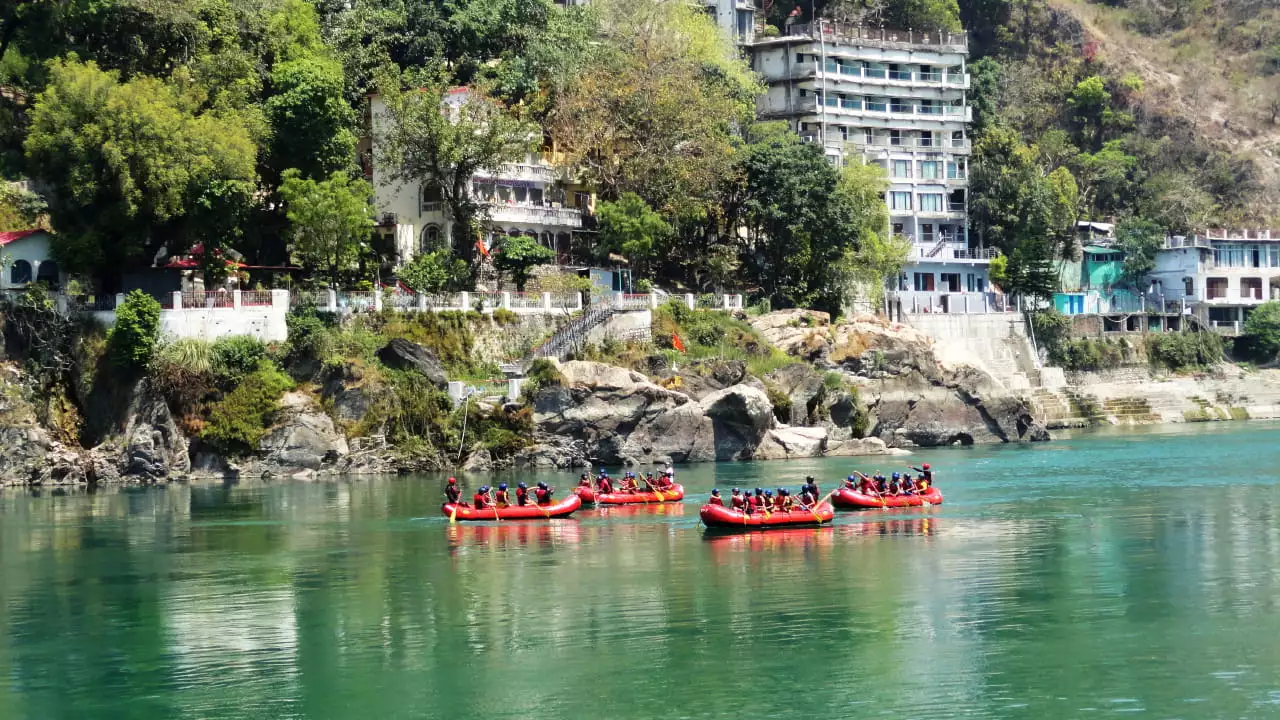
Rishikesh is the adventure sports capital of North India. The Ganges between Rishikesh and Haridwar — a stretch of roughly 36 km — offers some of the best white-water rafting in Asia, with rapids ranging from Grade II to Grade IV. The most popular rafting stretch is the 16 km run from Shivpuri to Rishikesh, which takes about 2.5–3 hours and includes rapids named Roller Coaster, Golf Course, Club House, and Three Blind Mice.
For more experienced rafters, the stretch from Kaudiyala to Rishikesh (36 km) includes the Class IV “Ganges Wall” and “Return to Sender” rapids and typically takes a full day. Several operators offer camping on the riverbank the previous night as part of a package.
Beyond rafting, the area around Rishikesh offers:
- Bungee jumping — at Jumpin Heights in Mohan Chatti village, 16 km from Rishikesh. At 83 metres, it is one of India’s highest fixed-platform bungee jumps.
- Flying fox (zip-lining) — across a gorge near Shivpuri, with a 500-metre run.
- Body surfing and kayaking — on calmer stretches near Rishikesh town.
- Rock climbing and rappelling — on the hillsides near Shivpuri and Neelkanth Road.
- Trekking — trails to Neelkanth Mahadev Temple (22 km round trip through forest) and the Rajaji National Park boundary are the most accessible.
- Mountain biking — rentals and guided routes are available through several operators in town.
Rafting season runs from September to June. July and August are the monsoon months; rafting is suspended due to high and unpredictable river levels. November to April is considered the best period — water levels are reliable and the weather is cool.
Neelkanth Mahadev Temple
About 32 km from Rishikesh by road (or a 22 km forest trek), Neelkanth Mahadev is one of the most visited Shiva temples in Uttarakhand. The temple marks the spot where Lord Shiva is believed to have consumed the poison (halahal) that emerged during the churning of the cosmic ocean (Samudra Manthan), turning his throat blue — hence the name Neelkanth (blue-throated). The temple sits at an altitude of 1,330 metres amid dense forest, and the drive to it passes through some of Rajaji National Park. On Maha Shivratri, hundreds of thousands of devotees make the trek to the temple on foot.
Char Dham Yatra — Rishikesh as the Gateway
Every year between May and June, millions of pilgrims pass through Rishikesh on their way to the four Himalayan shrines — Yamunotri, Gangotri, Kedarnath, and Badrinath. Rishikesh is the last major town before the roads narrow and climb into the mountains, and it serves as a provisioning, rest, and ritual preparation stop. Buses to Char Dham destinations depart from the ISBT in Rishikesh and from Haridwar Railway Station.
Pilgrims traditionally take a ritual bath at Triveni Ghat in Rishikesh before starting the yatra. Many also visit Parmarth Niketan or Sivananda Ashram for prayers and a brief ceremony before departing into the mountains. If you are planning a Char Dham pilgrimage, our Haridwar and Rishikesh tour package can serve as a good starting point to plan your route.
Other Places to Visit in and Around Rishikesh
Vashishtha Cave — about 25 km from Rishikesh, this cave is associated with the sage Vashishtha. It is considered a powerful meditation site and draws serious practitioners who sometimes spend days in retreat here.
Kunjapuri Devi Temple — 25 km from Rishikesh at 1,676 metres altitude, offering one of the finest sunrise views in Uttarakhand with the Garhwal Himalaya range visible on clear days. The drive up is part of the experience.
Swarg Ashram — an older neighbourhood across Ram Jhula, known for its traditional dhabas serving sattvic vegetarian food, small meditation centres, and the relatively traffic-free lanes along the riverbank. A good place to walk in the mornings.
Haridwar — 25 km south on a good road, Haridwar is one of the seven sacred cities of Hinduism and the site of the famous Har Ki Pauri ghat. The Ganga Aarti at Har Ki Pauri at dusk is extraordinary. Our guide to must-visit attractions in Haridwar covers the key stops if you are combining the two cities. Many visitors spend one or two days in Haridwar and then continue to Rishikesh. You can also read about the experience of bathing in the Ganges at Haridwar before you go.
Best Time to Visit Rishikesh
Rishikesh can be visited year-round, but different seasons offer different experiences:
- October to March: Cool and dry. Ideal for yoga retreats, trekking, and city exploration. The river is calm and clear. Nights in December–January can drop to 4–5°C.
- March to June: Warm days, pleasant evenings. The International Yoga Festival is in early March. This is the main Char Dham season (May–June). River rafting is excellent through to June.
- July to September: Monsoon. The town is lush and the hills are intensely green. Rafting is suspended. Some trekking routes are slippery. Not ideal for first-time visitors but quiet and atmospheric for those who do not mind rain.
How to Reach Rishikesh
By Air: The nearest airport is Jolly Grant Airport, Dehradun (DED), about 35 km from Rishikesh. Flights connect Dehradun with Delhi (multiple daily), Mumbai, Bengaluru, and other major cities. Taxis from the airport to Rishikesh take about 45–60 minutes and cost ₹800–1,200.
By Train: Rishikesh Railway Station is a small terminal at the end of a branch line, connected mainly to Delhi. Haridwar Railway Station (25 km away) has far more trains and is the better option for arrivals from most cities. From Haridwar, buses, shared taxis, and private cabs cover the distance to Rishikesh in 30–45 minutes (₹50–80 by bus or ₹400–500 by cab).
By Road: Rishikesh is well connected by road to Dehradun (43 km, 1 hour), Haridwar (25 km, 40 minutes), and Delhi (238 km, 5–6 hours by highway). Volvo AC buses run direct from Delhi’s ISBT Kashmiri Gate to Rishikesh in about 6 hours. Uttarakhand Roadways buses are frequent and cheaper. Taxis from Delhi cost ₹3,000–4,000.
Where to Stay in Rishikesh
Accommodation in Rishikesh broadly divides by location — the Tapovan/Laxman Jhula area for the yoga and backpacker crowd, and the Muni Ki Reti/Ram Jhula area for pilgrims and families. There is no shortage of options at any budget level:
- Budget: Dozens of ashram guesthouses around Laxman Jhula and Ram Jhula offer simple, clean rooms from ₹500–800 per night.
- Mid-range: Hotels like Brijwasi Royal, Hotel Dev Lok, and Atali Ganga offer comfortable rooms with river views from ₹2,000–5,000.
- Luxury: Taj Rishikesh Resort and Spa (Neelkanth Road) and Ananda in the Himalayas (Narendra Nagar, 20 km away) are outstanding properties with world-class wellness facilities.
- River camps: During the rafting season, several operators run tented camps on the riverbank between Shivpuri and Rishikesh. These are excellent for groups combining rafting with an overnight stay.