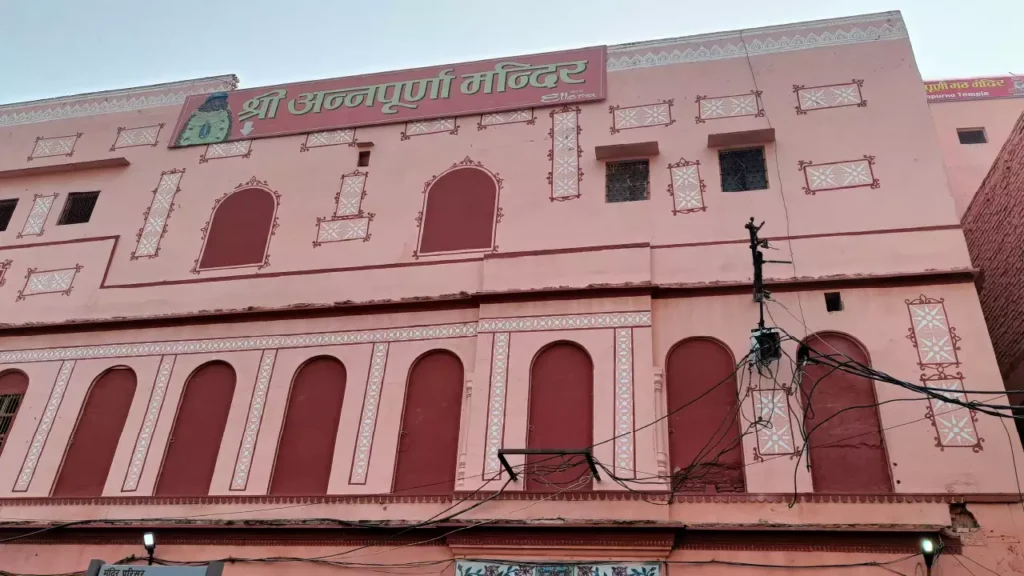
The Annapurna Devi Temple in Varanasi is one of the most beloved temples in all of Kashi, dedicated to Goddess Annapurna — the divine embodiment of nourishment, abundance, and the sacred act of feeding. Situated in the densely woven lanes near Vishwanath Gali in the heart of the old city, the temple stands at the intersection of two of Varanasi’s most central themes: food as a spiritual act, and the city as the body of the goddess herself.
Annapurna is a form of Goddess Parvati, the consort of Lord Shiva. The name itself means “she who is full of food” — “anna” meaning food and “purna” meaning complete or full. Theological texts describe her as the one who ensures that no living being goes hungry, and her blessings are sought not just for material sustenance but for the nourishment of the soul.
Mythological Origins
The most celebrated legend associated with this temple involves Lord Shiva himself. One day, Shiva declared to Parvati that the material world — including food — is an illusion (maya), upon which Parvati disappeared from the world to prove her indispensability. As a result, the earth lost its fertility and abundance; crops withered, rivers ran dry, and living beings starved. A chastened Shiva realised his error and travelled to Kashi to beg for food from Parvati, who had re-manifested here as Annapurna Devi. He received food from her sacred hands — an act that established Varanasi as the eternal seat of Annapurna and affirmed that food, far from being mere illusion, is a form of the goddess herself.
This story is why Varanasi has maintained an unbroken tradition of free community feeding (anna daan) for centuries. Even today, many households, ashrams, and charitable trusts in Varanasi serve free meals in the name of Maa Annapurna.
Architecture and the Temple Complex
The Annapurna Devi Temple is believed to have been built in its present form in the early 18th century, around 1725 CE, under the patronage of Peshwa Baji Rao I. The structure reflects the Maratha style of temple architecture that the Peshwas patronised across their domains — characterised by a compact but ornate shikhara, silver-plated doorways, and richly adorned inner sanctum walls.
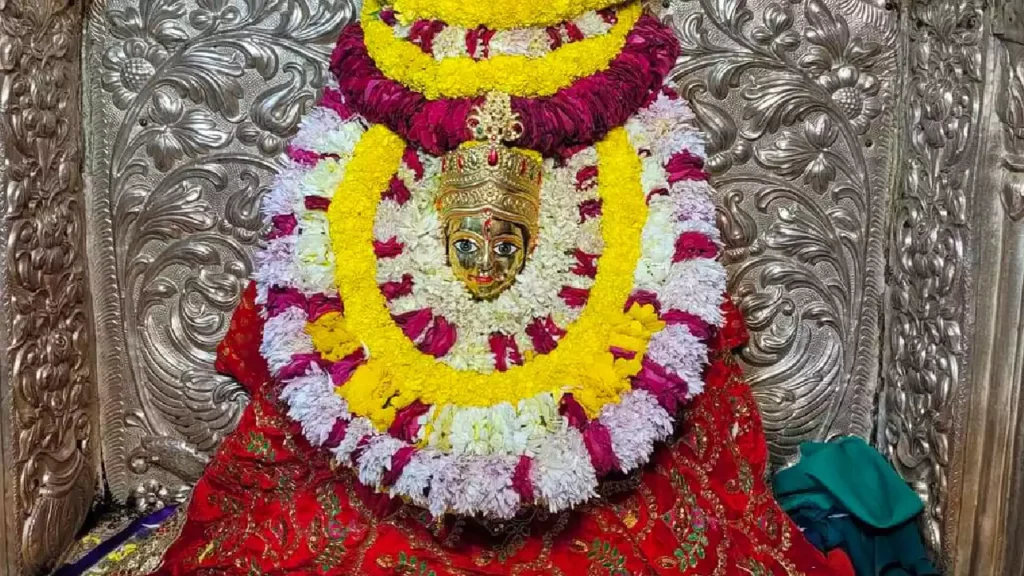
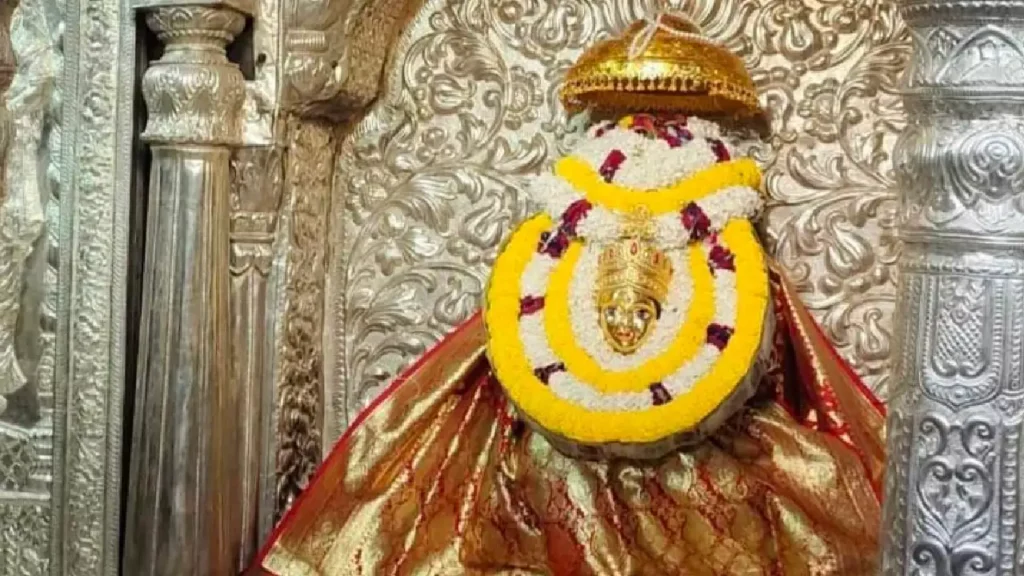
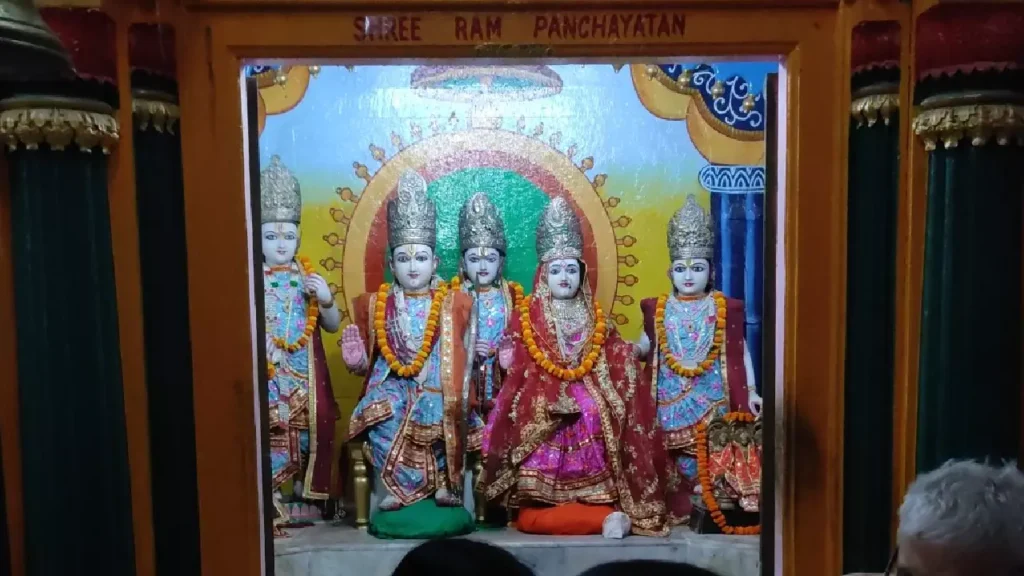
The presiding deity, Annapurna Devi, is depicted holding a golden ladle and a bowl of kheer (rice pudding), ready to feed all who come to her. The idol is beautifully adorned with jewellery and fine garments, and during major festivals the decoration is particularly elaborate. Adjacent to the main shrine is a smaller temple dedicated to Lord Shiva, reinforcing the mythological narrative of Shiva receiving food from Annapurna in this very location.
The temple is located immediately adjacent to the Kashi Vishwanath corridor and is considered one of the eight principal Shakti peethas of Varanasi (Ashtabhuja). Devotees who come to seek Vishwanath’s blessings traditionally also visit Annapurna Devi, as the two shrines are spiritually complementary — Shiva and Shakti dwelling side by side in Kashi.
Darshan Timings and Rituals
The temple opens at 5:00 AM for Mangala Aarti and remains open until 11:30 AM for morning darshan. After a midday break for ritual bathing (abhishek) of the deity, the temple reopens at 4:00 PM and closes around 9:00 PM. Five aarti ceremonies are performed daily, each marking a different phase of the goddess’s spiritual day — from the early morning awakening (Mangala) to the night rest (Shayan). The Shringar Aarti in the early evening, when the deity is adorned with fresh flowers and lamps are waved before her, is considered especially auspicious.
A special puja is offered each year on Anna Koot — the day after Diwali — when the community brings offerings of food to the goddess in a spirit of gratitude for the harvest. Navratri is the other major festival period, with nine days of special rituals, havan (fire ceremony), and extended darshan hours.
Spiritual Significance
Varanasi’s identity is inseparable from food and nourishment. The city’s tradition of free feeding — langars at the ghats, prasad distributed at every temple, community kitchens running through the night — flows directly from the theology of Annapurna Devi. To offer food in Varanasi is considered among the highest acts of merit. Pilgrims who come to the Annapurna Devi Temple often bring raw grain, rice, and lentils as offerings, which are then redistributed to the needy — a living enactment of the goddess’s principle.
The temple also holds importance in the Shakta tradition as one of the Shaktipeethas of Kashi. Each Shaktipeeth represents a different aspect of the divine feminine, and Annapurna represents the sustaining, nurturing face of Shakti — the force that keeps the world alive.
How to Reach
The temple is located inside the Vishwanath Gali lane system in the old city of Varanasi, very close to the Kashi Vishwanath Temple complex. The nearest access point for vehicles is Godaulia Chowk, from where the temple is a 5-7 minute walk through the lanes. Auto-rickshaws and cycle-rickshaws are available from Varanasi Junction (approx. 20 minutes). The Kashi Vishwanath corridor has improved pedestrian access to this part of the city significantly in recent years.
Nearby Temples and Sites
The Annapurna Devi Temple is surrounded by some of Varanasi’s most sacred sites. The Kashi Vishwanath Jyotirlinga is mere steps away. The Annapurna Ghat on the Ganga is directly connected to the temple through the lane network. Manikarnika Ghat — Varanasi’s most sacred cremation ground — is about 15 minutes on foot. This dense cluster of shrines makes the old city an extraordinarily concentrated pilgrimage zone, and a visit to Annapurna Devi fits naturally into any temple circuit through the Vishwanath area.
Experience the spiritual heart of Varanasi with our comprehensive Varanasi travel and pilgrimage guide. Visit Annapurna Devi Temple and the full Kashi temple circuit on our Varanasi 2N/3D tour package.