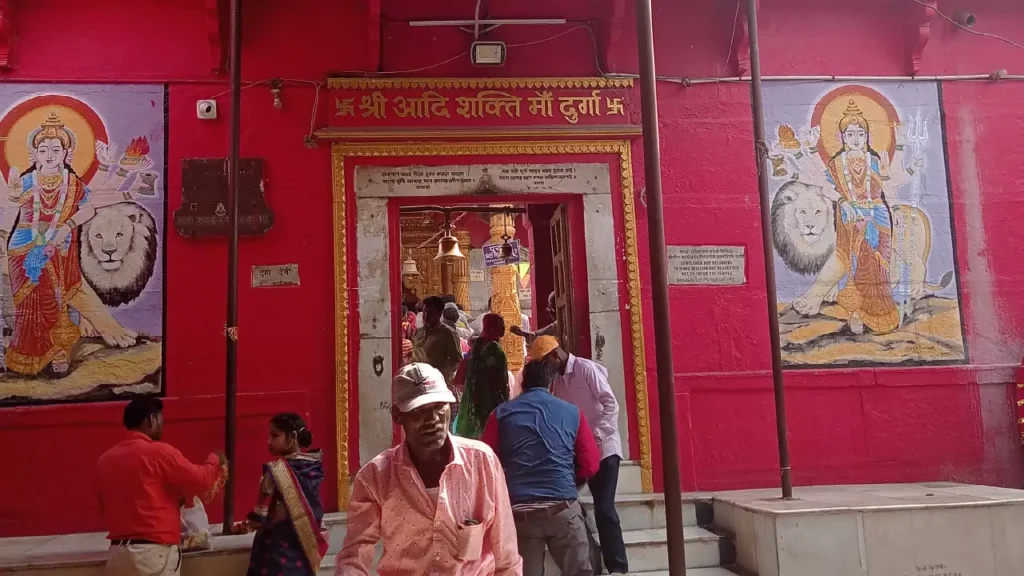
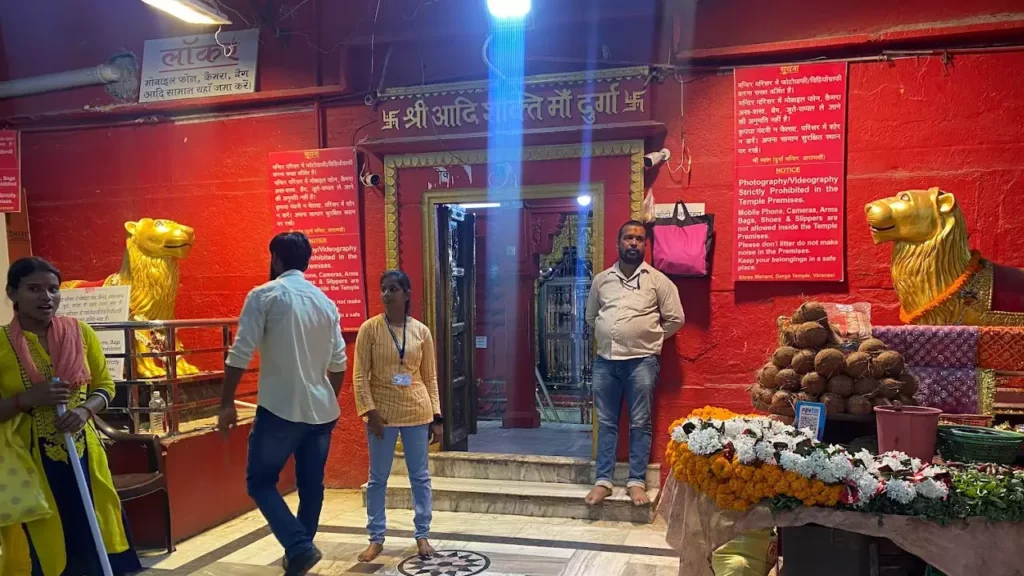
Durga Mandir, widely known as Durga Kund Temple, is one of Varanasi’s most visited and spiritually charged shrines. Situated near the Durga Kund tank in the Shivala area, about 7 kilometres from Varanasi Junction, the temple draws tens of thousands of pilgrims each year — particularly during Navratri, when the entire complex transforms into a festival of lights, music, and devotion.
A Bengali Maharani commissioned the temple in the 18th century, though local tradition insists that the presiding deity of Goddess Durga was never installed by human hands — she is believed to have manifested spontaneously (swayambhu). According to this belief, Goddess Durga has stood as the divine guardian of Varanasi from the south for centuries, shielding the city from harm and maintaining its sacred character.
Architecture and the Sacred Tank
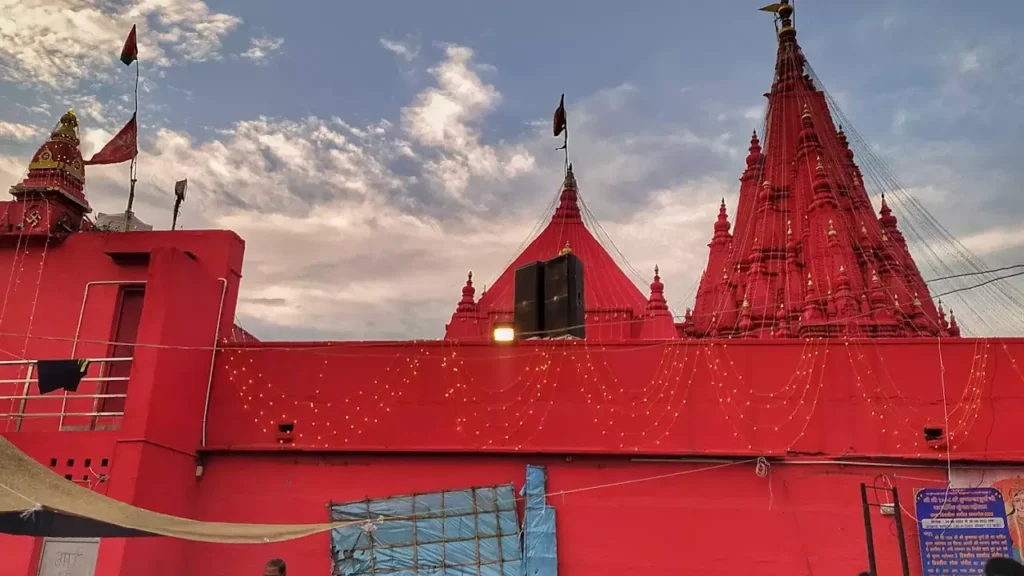
The temple was built in the classic Nagara architectural style, with a multi-tiered shikhara (spire) that rises dramatically above the surrounding lanes. Its exterior is painted a deep red-ochre to mirror the colour traditionally associated with Goddess Durga — the hue of strength, power, and divine energy. The main structure is composed of numerous small sikharas joined by connecting walls, creating a layered silhouette that is unmistakable on the Varanasi skyline.
The Durga Kund — the rectangular sacred tank adjacent to the temple — gives the complex its popular name. The tank is considered holy, and bathing in it on auspicious days is believed to wash away sins. Within the temple complex, devotees can also pay respects to shrines dedicated to Goddess Lakshmi (the deity of prosperity), Goddess Saraswati (the deity of wisdom), and Goddess Kali (the fierce form of Shakti). A modest Kharva Narasimha shrine is located near the adjacent Durga Ghat, making this area a compact but powerful pilgrimage cluster.
The temple’s association with monkeys is well-known among locals and visitors alike. Dozens of rhesus macaques inhabit the compound and its surroundings, leading many to call it the “Monkey Temple” — though its spiritual identity remains firmly rooted in the worship of Durga.
History and the Saint Narayana Diksith
While the Bengali Maharani funded the current temple structure, oral tradition also attributes a key role to the saint Narayana Diksith, who is said to have performed the consecration rites around 1772. The temple’s founding reflects the patronage that Varanasi’s temples have historically received from royalty and wealthy devotees across the subcontinent — each seeking the blessings of the goddess for their lineage and territories.
Over the centuries, Durga Kund Temple has survived invasions, political upheaval, and the transformation of Varanasi from a Mughal-era city to a modern urban centre. Through all of this, daily worship has continued without interruption, a testament to the depth of devotion the goddess inspires.
Festivals and Celebrations
The temple comes alive during Navratri — both the Chaitra Navratri in spring and the Sharadiya Navratri in autumn. For nine nights, the complex is illuminated and thronged with devotees who come to perform the nine-day fast, attend aarti, and seek the goddess’s blessings for health, protection, and fulfilment of wishes. Queues often stretch hundreds of metres outside the gates.
Nag Panchami is another major occasion at Durga Kund. The sacred tank is decorated to recreate the scene of Vishnu reclining on the serpent Adi Shesha, drawing enormous crowds who come to offer milk to the nagas (serpent deities) and pray for protection from snakebites and misfortune.
Ashtami (the eighth day of both lunar fortnights) is observed with special rituals throughout the year, and the Monday of each week sees elevated footfall from Shiva devotees who visit the nearby shrines within the complex.
Darshan Timings
The temple is generally open from 5:00 AM to 12:00 PM in the morning and from 3:00 PM to 10:00 PM in the evening. Timings may extend during major festivals. Morning aarti (Mangala Aarti) takes place around 5:30 AM and is a particularly atmospheric experience. Evening Shringar Aarti is performed around 7:00 PM and draws large gatherings of devotees who light incense and sing devotional hymns.
Spiritual Significance
In the Shakta tradition, Varanasi itself is considered the body of the goddess, and temples like Durga Kund are seen as her living presence within the city. Worshippers come not merely for ritual observance but for an intimate encounter with Shakti — the primal energy that sustains creation. Many pilgrims visit Durga Kund Temple as part of the Pancha Kosi Parikrama, the ancient 84-kilometre circumambulation of Varanasi that touches dozens of sacred sites along its route.
Seek the blessings of Maa Durga and explore the full spiritual circuit of Varanasi with our Varanasi pilgrimage guide. Plan your visit as part of our Varanasi 2N/3D tour package, which covers the key temples, ghats, and cultural landmarks of this eternal city.
How to Reach Durga Kund Temple
The temple is located in the Durgakund area of Varanasi, easily accessible by auto-rickshaw or e-rickshaw from Varanasi Cantt railway station (approx. 25 minutes) and from Godaulia (approx. 15 minutes). The nearest bus stand is at Lanka, from where the temple is a short walk. Parking is limited near the temple during festivals, so arriving on foot or by two-wheeler is recommended during Navratri.
Nearby Temples and Sites
Durga Kund Temple sits within walking distance of several other important shrines. The Tulsi Manas Temple — dedicated to Lord Rama and commemorating the composition of the Ramcharitmanas — is just a few hundred metres away. Sankat Mochan Hanuman Temple is approximately 1 kilometre to the southwest. The Durga Ghat on the Ganga is about 2 kilometres away and makes for a natural extension of any temple visit in this part of the city.