Hanuman Garhi — The Fortress of Devotion
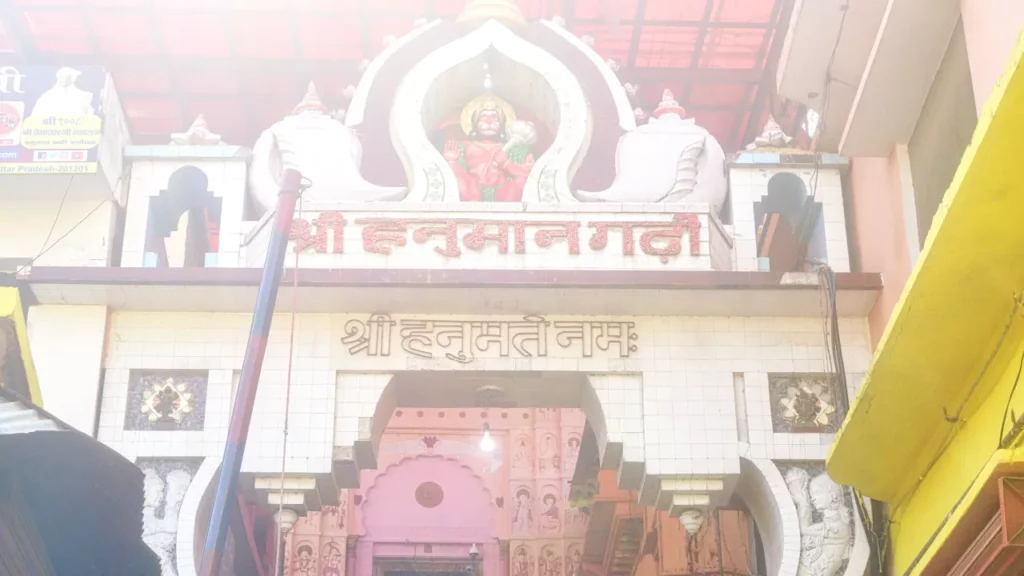
Hanuman Garhi is Ayodhya’s most visited and most strategically placed temple — a fort-like shrine perched atop a 10-metre high mound at the heart of the city, reached by 76 steep steps. The name is literal: “garhi” means fort or fortified structure, and indeed this temple has the physical profile of a military installation rather than a typical Hindu shrine. The reason, according to tradition, is that Lord Hanuman himself guards Ayodhya from this elevated position — the ever-vigilant sentinel of Ram’s birthplace.
For pilgrims arriving in Ayodhya, Hanuman Garhi is almost always the first stop before proceeding to the Ram Janambhoomi complex. This sequence is not arbitrary — it reflects the theological logic that Hanuman is the gateway to Rama, the devoted servant through whom the Lord is most easily reached. Pilgrims seek Hanuman’s blessings here before approaching Ram Lalla, trusting that Hanuman’s intercession will make their darshan more fruitful.
Mythology and Founding Legend
The founding story of Hanuman Garhi is tied to the mythology of the Ramayana and the spiritual geography of Ayodhya. According to tradition, Lord Hanuman took up residence on this hill to guard the city during the period when Lord Rama ruled Ayodhya as king. When Rama departed for Vaikuntha (the divine realm), Hanuman chose to stay on earth, continuing to protect the sacred city and all those who call out to Rama. The mound on which the temple stands is said to be the very spot where Hanuman sat — and still sits — in eternal vigil.
Another tradition holds that the temple was established during the reign of Nawab of Awadh, Shuja-ud-Daula, in the 18th century when a Sant named Abhayaramdas had a vision of Hanuman at this location. The Nawab, who held great respect for the Vaishnava saints of Ayodhya, reportedly donated land and resources for the temple’s construction. The trust that manages the temple is connected to the lineage of this saint.
Architecture and the Temple Complex
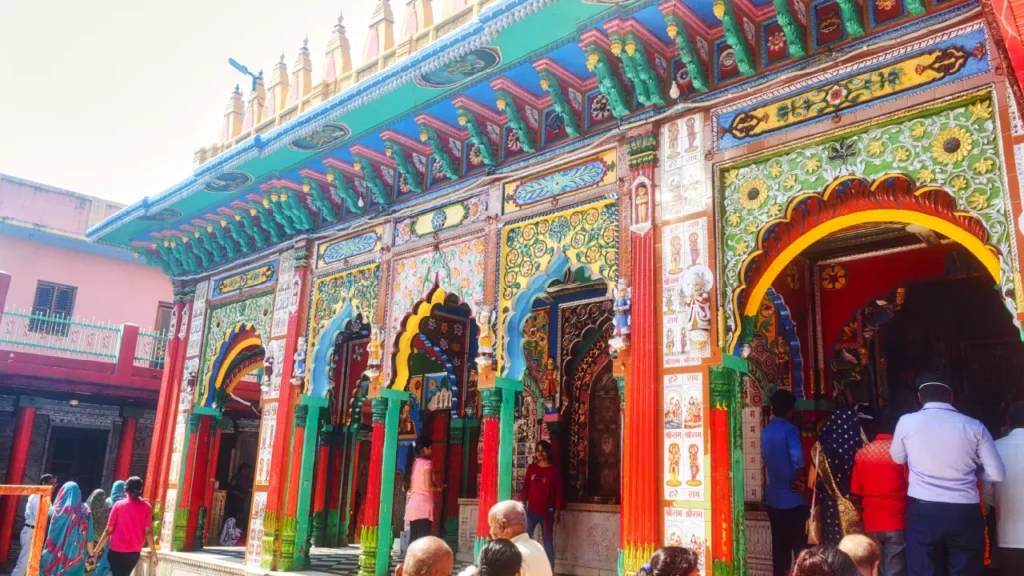
The temple is housed inside a large fortress structure with high walls and bastions at the corners — an architectural arrangement that is genuinely unusual for a Hindu temple and reflects the name “garhi” (fort). The 76 steps leading up to the temple gate are flanked by shops selling garlands, prasad, and devotional items. At the summit, the temple courtyard opens into a surprisingly spacious area with the main shrine at its centre.
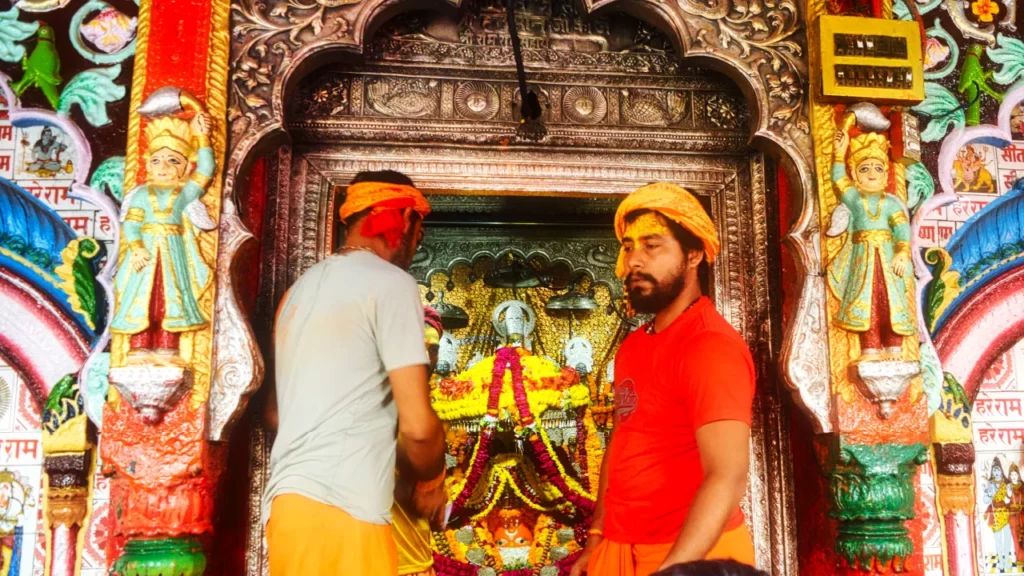
The main sanctum houses the primary idol — a beautiful image of Hanuman depicted as an infant, resting in the lap of his mother Anjani. This form, known as Bal Hanuman or Anjani-Putra (son of Anjani), emphasises Hanuman’s divine birth rather than his heroic deeds. The idol is richly adorned with flowers, sindoor (vermilion), and silver ornaments. A large Hanuman murti also stands nearby in the classic warrior posture, holding his mace.
From the temple terrace, the view over Ayodhya is outstanding — the minarets, temple spires, and the golden dome of the Ram Mandir complex are all visible, as are the Sarayu River ghats in the distance. This vantage point gives pilgrims a sense of the city’s sacred topography.
Darshan Timings and Rituals
- Morning darshan: 5:00 AM – 12:00 PM
- Evening darshan: 4:00 PM – 10:00 PM
- Hanuman Jayanti (celebrated on Chaitra Purnima, April–May) is the temple’s grandest festival
- Tuesdays and Saturdays are considered especially auspicious for Hanuman worship — queues are longer on these days
- During Ram Navami, the entire city including Hanuman Garhi celebrates with illumination and cultural programmes
Hanuman’s Role in the Ramayana — Context for Pilgrims
Hanuman’s centrality to the Ramayana narrative is why his presence in Ayodhya carries such weight. It was Hanuman who crossed the ocean to Lanka, found Sita imprisoned in the Ashok Vatika, delivered Rama’s ring to her as a token of recognition, and burned Ravana’s Lanka with his tail set ablaze. He carried the Sanjeevani herb to revive the fallen Lakshmana. He lifted an entire mountain when the herb proved elusive. In the Uttara Kanda, Hanuman chooses to remain on earth for as long as the name of Rama is remembered and sung.
The Hanuman Chalisa, composed by Tulsidas who lived in Varanasi but spent time in Ayodhya, is the most widely recited text in daily Hindu worship. It is recited here at Hanuman Garhi multiple times a day, and the sound of its verses rises continuously from the temple courtyard.
How to Reach Hanuman Garhi
- Location: Hanuman Garhi Road, central Ayodhya, approximately 500 metres from the Ram Janambhoomi gate
- By train: Ayodhya Dham Junction (re-inaugurated in 2023) is 1.5 km away; Ayodhya Cantt station is 2 km
- By road: Ayodhya is 135 km from Lucknow, 200 km from Prayagraj, 355 km from Varanasi by road
- By air: Maharishi Valmiki International Airport, Ayodhya, inaugurated in December 2023, is 8 km from the city centre
Nearby Temples in Ayodhya
Ayodhya is extraordinarily dense with sacred sites. Within a short walk of Hanuman Garhi: the Ram Janambhoomi Temple (Ram Mandir, approximately 500 metres), Kanak Bhawan (the golden palace where Rama and Sita are enshrined, gifted to Sita by Kaikeyi), Nageshwarnath Temple (believed to have been established by Kusha, Rama’s son), and the Sita Ki Rasoi (Sita’s Kitchen — a shrine marking the spot of the royal household’s kitchen). The Sarayu River ghats, particularly Ram Ki Paidi and Swargadwar Ghat, are a 10-minute walk for ritual bathing.
See our complete Ayodhya travel guide for the full pilgrimage itinerary. Travel with us on the Varanasi–Prayagraj–Ayodhya 3N/4D tour. Further reading: Hanuman Garhi Ayodhya — detailed guide.