The Kaal Bhairav Temple in Varanasi is unlike any other shrine in this city of thousands of temples. Here, Lord Shiva is worshipped in his most fierce and time-consuming form — Kaal Bhairav, the Lord of Time (Kaal), the divine administrator of Varanasi, and the one deity whose permission is considered essential for any soul wishing to reside in or pass through this sacred city. For pilgrims, a visit to the Kashi Vishwanath Temple is traditionally incomplete without also paying respects to Kaal Bhairav.
Located in the Kotwalpuri area near Godaulia, the temple presides over the old city with an authority that is both spiritual and administrative. Kaal Bhairav is known as the Kotwal (chief constable) of Kashi — the one who maintains divine order in the city, punishes transgressors, and records the karmas of all souls. Worshipping Kaal Bhairav before or after visiting other temples in Varanasi is considered mandatory for serious pilgrims, both as an act of respect and as a way of ensuring safe passage through the city’s spiritual terrain.
Mythology: The Origin of Kaal Bhairav
The Kaal Bhairav form of Shiva has its origins in one of Hinduism’s most dramatic mythological episodes. Lord Brahma, the creator of the universe, grew excessively proud of his five heads. In his arrogance, he began to assert supremacy over Shiva, even claiming that he himself had created Shiva. Enraged by this transgression, Shiva manifested as Kaal Bhairav and severed one of Brahma’s five heads with the nail of his thumb. From that moment, Brahma possessed only four heads, as he does in all iconographic representations today.
However, the severed head stuck to Kaal Bhairav’s hand, adhering as a consequence of the sin of Brahmahatya (the killing of a Brahmin, since Brahma is considered the first Brahmin). To cleanse himself of this sin, Kaal Bhairav wandered the universe as a beggar (Bhikshatana) with the skull of Brahma as his begging bowl. His wandering ended when he arrived in Varanasi. The moment he set foot in Kashi, the sin dissolved and the skull fell from his hand. This liberation occurred at the site now known as Kapala Mochan (the liberation of the skull), and Kaal Bhairav settled in Varanasi as its eternal guardian.
Architecture and the Sacred Image
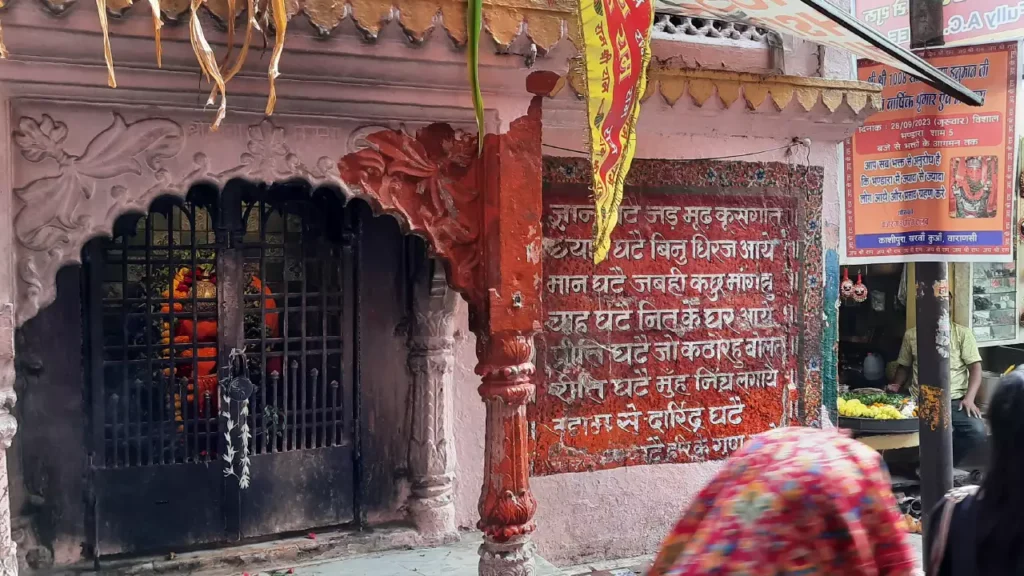
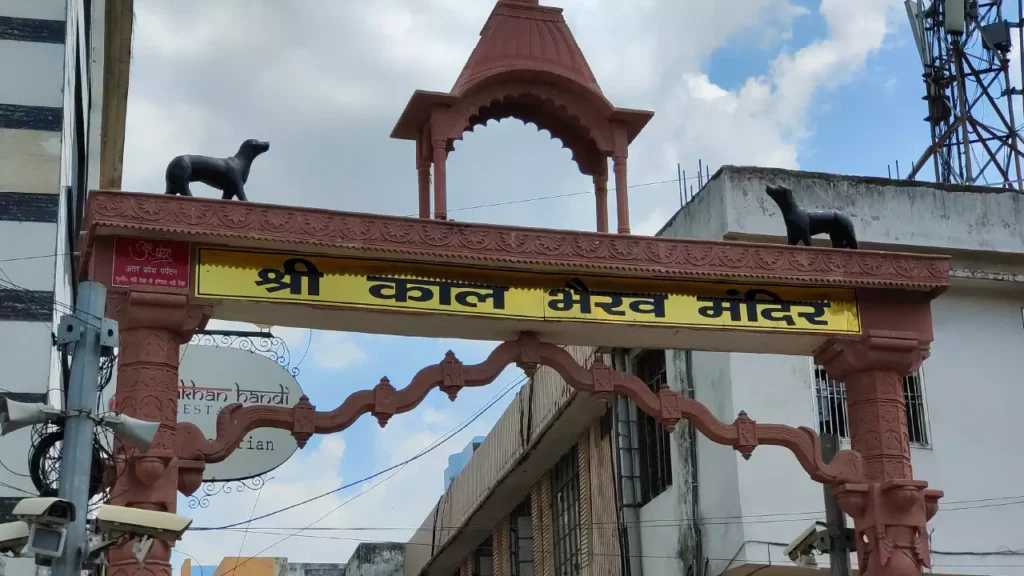
The temple is built in a compact style appropriate to the dense old city, with a distinctive red-painted facade that conveys the fierce energy of Bhairav. The entrance is marked by an imposing idol of the Bhairav vahana (vehicle) — a large black dog, since the dog is Bhairav’s sacred mount and guardian. Many devotees offer food to the dogs that live near the temple as an act of worship.
Inside, the main deity is Kaal Bhairav, depicted with a fearsome dark complexion, multiple arms holding a trident, a noose, a drum, and a skull. He wears a garland of skulls and is adorned with serpents. The presiding image is not directly visible to casual visitors — darshan takes place at close quarters in a small, charged inner sanctum. The atmosphere is intense, with constant chanting, the smell of incense and liquor offerings, and the sound of drums.
The Liquor Offering (Madira Prasad)
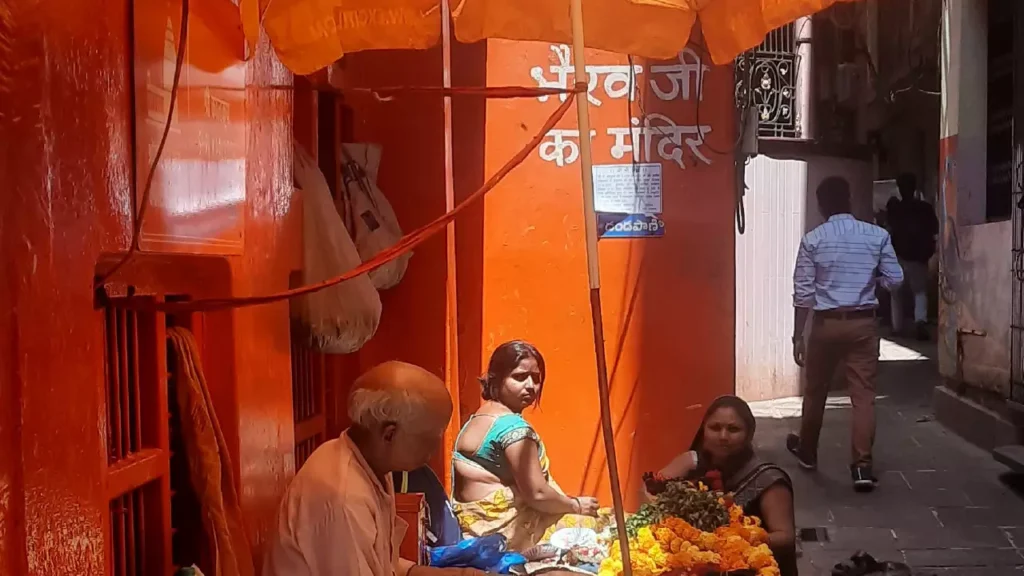
One of the most distinctive practices at Kaal Bhairav Temple is the offering of liquor (madira or sharab) to the deity. Unlike most Hindu temples where liquor is prohibited, here it is considered an appropriate and sacred offering to Bhairav — reflecting the Tantric dimension of his worship. Shops outside the temple sell small bottles of alcohol specifically for this ritual offering. After the offering is made, the liquor is received back as prasad by devotees, which they consume as a blessing. This practice, while surprising to those encountering it for the first time, reflects the non-dual Tantric understanding in which all substances, in the context of worship, become sacred.
Darshan Timings and Major Festivals
The temple is open from 5:00 AM to 12:00 PM and from 3:00 PM to 10:00 PM daily. Kalabhairav Ashtami — falling on the eighth day of the dark fortnight of Margashirsha (November-December) — is the temple’s most important festival. On this night, massive crowds gather for special pujas, abhishek, and all-night vigil. Midnight is considered particularly powerful for Bhairav worship. The festival recalls Shiva’s manifestation as Bhairav and draws devotees from across the country.
Bhairav is also worshipped intensely during Shivratri, and Sunday evenings see elevated footfall as this day is traditionally associated with Bhairav in the Tantric calendar.
Role in the Varanasi Pilgrimage Circuit
Kaal Bhairav is one of the eight Bhairavas of Kashi — each protecting a different direction and quadrant of the sacred city. Together they form an invisible protective ring around Varanasi, and visiting all eight is considered a complete Bhairav Parikrama. Kaal Bhairav, as the most senior and powerful of these eight, is the starting point for this circuit. He is also worshipped as the guardian of the Kashi Panch Koshi Parikrama and is invoked at the start of major pilgrimages.
Explore Varanasi’s temples and sacred geography through our Varanasi pilgrimage guide, and visit Kaal Bhairav Temple along with the city’s other major shrines on our Varanasi 2N/3D tour package.
How to Reach
The temple is located in the Kotwalpuri/Godaulia area of old Varanasi — one of the most accessible parts of the old city. It is a short walk (5-10 minutes) from Godaulia Chowk. Auto-rickshaws are available from Varanasi Junction to Godaulia, from where the temple is easily reached on foot through the lanes. The Kaal Bhairav area also has several small dhabas (roadside restaurants) where pilgrims can eat before or after their visit.