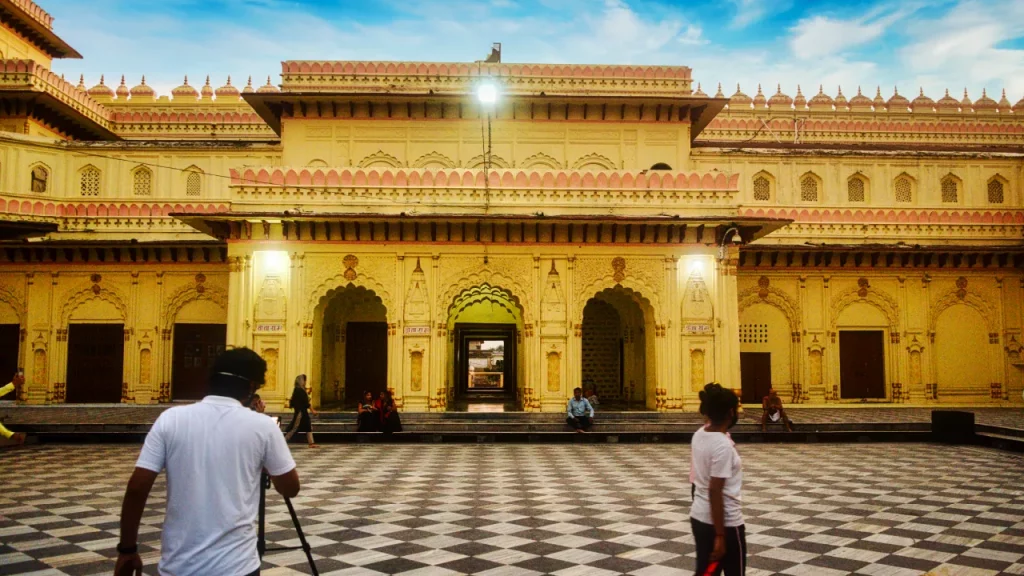
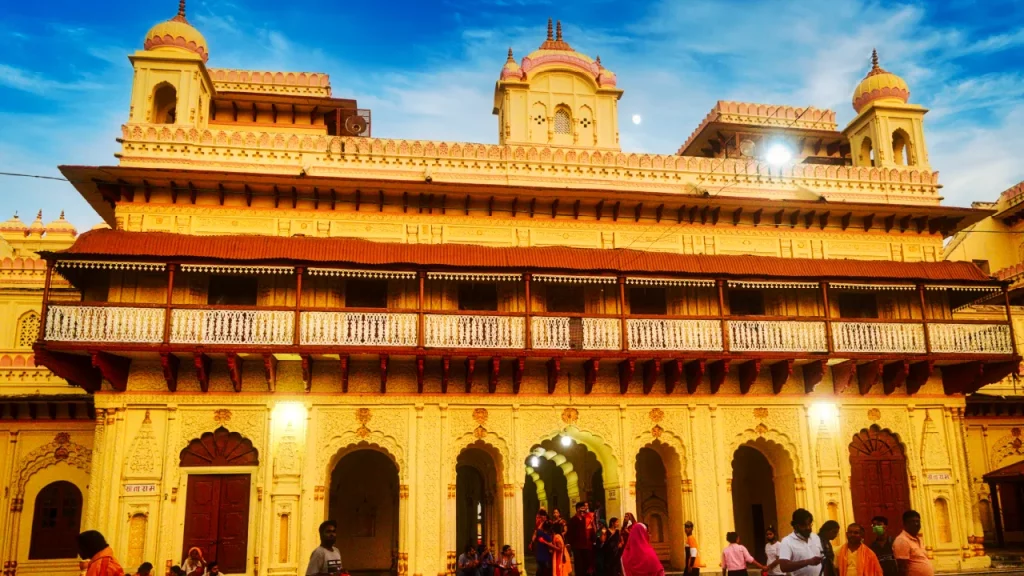
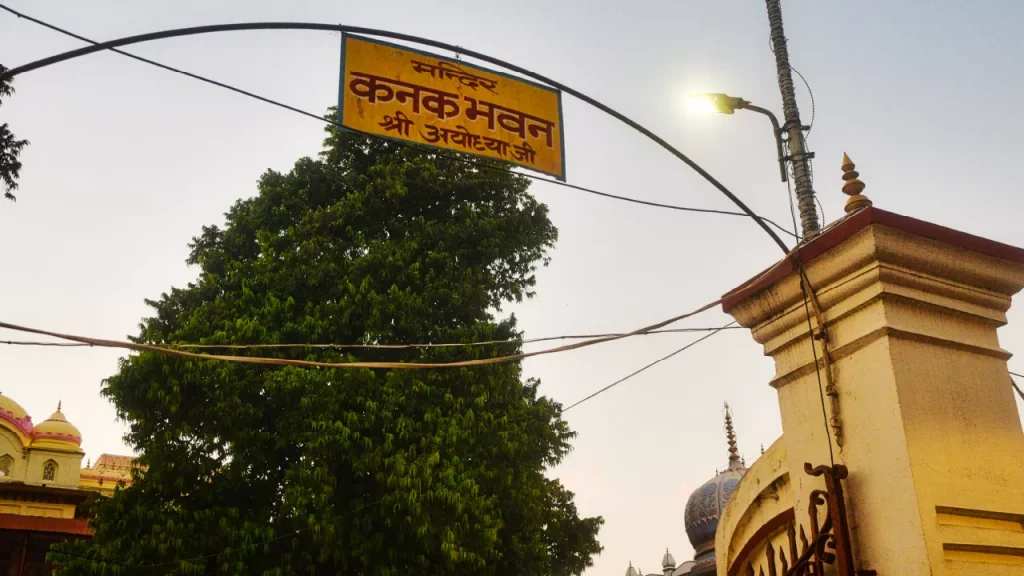
Kanak Bhawan is one of the most beloved temples in Ayodhya — a place where devotion takes on a golden hue, quite literally. The name means “Golden House,” and the temple lives up to it: its shikhara gleams, its sanctum is adorned with gold ornaments, and the idol of Ram-Sita here is dressed in regal attire that sets this temple apart from every other shrine in the city. For pilgrims arriving in Ayodhya, Kanak Bhawan is not an afterthought — it is the heart of the visit.
The Gift of Queen Kaikeyi
The story of Kanak Bhawan begins on the day of the wedding of Lord Ram and Goddess Sita. When the newly married couple arrived in Ayodhya, Queen Kaikeyi — one of King Dasharatha’s three wives — presented Sita with a personal palace as a wedding gift. This palace, meant for Sita’s exclusive use, came to be known as Kanak Bhawan, the Golden Abode. The gift was an act of great love and affection from Kaikeyi, who at that time shared a particularly warm bond with Ram. The original structure was this royal residence that Kaikeyi gave to her beloved daughter-in-law.
This origin story holds deep emotional significance. In the Ramayana narrative, Queen Kaikeyi is best known for later demanding that Ram be exiled for fourteen years — a decision that altered the course of the epic. But Kanak Bhawan preserves the earlier, tenderer chapter of their relationship, the one before grief and politics intervened. Visiting the temple is, in a sense, remembering Kaikeyi not as the villain of popular imagination but as a mother who loved Ram enough to gift Sita a palace of gold.
History: Renovations Across the Centuries
The temple that stands today is not the original palace. Like most ancient sacred sites, Kanak Bhawan was built, destroyed, rebuilt, and renovated across centuries. Historical accounts credit Vikramaditya — the legendary king of Ujjain — with rebuilding the temple during a period when Ayodhya was being restored as a pilgrimage centre after centuries of neglect. Later renovations were carried out by Maharani Vrushbhanu Kunwari of Orchha in the 19th century, who undertook a major reconstruction that gave the temple much of its present architectural form. The marble courtyard, the ornately carved gateway, and the inner sanctum design largely reflect her patronage.
The temple was further embellished in the early 20th century. The magnificent gold-plated crowns and jewellery worn by the idols of Ram and Sita today are largely the result of donations made by devotees over generations — a continuous act of collective love that has dressed the divine couple in ever-increasing splendour.
The Idols: Ram and Sita in Divine Splendour
The presiding deities of Kanak Bhawan are Ram and Sita, seated together on an elevated throne. Unlike many Ram temples where Ram is depicted alone or in a warrior posture, the idols here show the divine couple in a state of serene togetherness — Ram and Sita as a royal household, as Grihasta (householders), as the ideal couple of Hindu tradition. The idols are bathed, dressed, and adorned with fresh clothing and jewellery multiple times each day as part of the Shringar ritual.
The Shringar darshan — the morning viewing after the deities have been dressed and decorated — draws the largest crowds. Devotees queue from early morning for a glimpse of Ram and Sita in their full ornamental splendour. The entire sanctum is illuminated with lamps during the Aarti, and the combined effect of the golden walls, the bejewelled idols, and the fragrance of flowers and incense creates an atmosphere that is genuinely overwhelming for first-time visitors.
Ram Rajya and the Spirit of Kanak Bhawan
Kanak Bhawan embodies a specific vision of Ram Rajya — the ideal kingdom ruled by Ram, characterised by abundance, justice, and divine grace. The “golden house” is not merely an architectural description; it is a symbol of the prosperity that Ram’s rule was said to bring to Ayodhya. The Valmiki Ramayana describes Ayodhya during Ram Rajya as a city where no one was in want, where the rains fell at the right time, where disease was absent, and where every home resonated with the sound of Vedic recitation. Kanak Bhawan, as Sita’s personal palace, represents the intimate, domestic dimension of that golden age.
When Ram returned from his fourteen-year exile — celebrated every year as Diwali — the first place Sita is said to have visited was Kanak Bhawan. This adds another layer of meaning to the temple: it is not just a place of coronation or warfare, but a place of homecoming, of reunion, of the joy that follows long separation. Pilgrims who come here on Diwali or Ram Navami feel they are participating in that homecoming.
Festivals at Kanak Bhawan
The temple calendar is full and festive. Ram Navami, which marks the birth of Lord Ram, is the grandest celebration — the entire city of Ayodhya reverberates with devotional singing, and Kanak Bhawan sees tens of thousands of pilgrims in a single day. Vivah Panchami, which commemorates the wedding of Ram and Sita, is another major event at this temple specifically, given that Kanak Bhawan was Sita’s wedding gift. The atmosphere on Vivah Panchami is unlike any other day — the idols are dressed as bride and groom, and the entire ceremony of the Gandharva Vivah is re-enacted with great pomp.
Diwali at Kanak Bhawan is equally spectacular. The temple and the surrounding lanes are lit with thousands of earthen lamps, and the sight of the golden temple flickering in the lamplight draws pilgrims and visitors from across India. Shravan Mela and Kartik Mela also see significant footfall, as devotees combine a month of religious observance with darshan at Ayodhya’s major temples.
How to Reach and What to Know
Kanak Bhawan is located in the Ramkot area of Ayodhya, close to the Ram Janmabhoomi complex. It is within comfortable walking distance from the main pilgrimage circuit that includes the Hanuman Garhi, Dashrath Mahal, and the Ram Janmabhoomi temple. The temple is managed by the Vaishnav Sampraday and follows a fixed schedule of opening and closing times, with specific darshan slots during peak festivals. Visitors are expected to remove footwear before entering the main courtyard and to maintain the sanctity of the space.
Explore our complete Ayodhya travel guide for the full pilgrimage circuit, accommodation options, and the best time to visit. Plan your trip with our Varanasi-Prayagraj-Ayodhya 3N/4D tour package, which covers the major temples and ghats of all three sacred cities in a single well-organised journey.