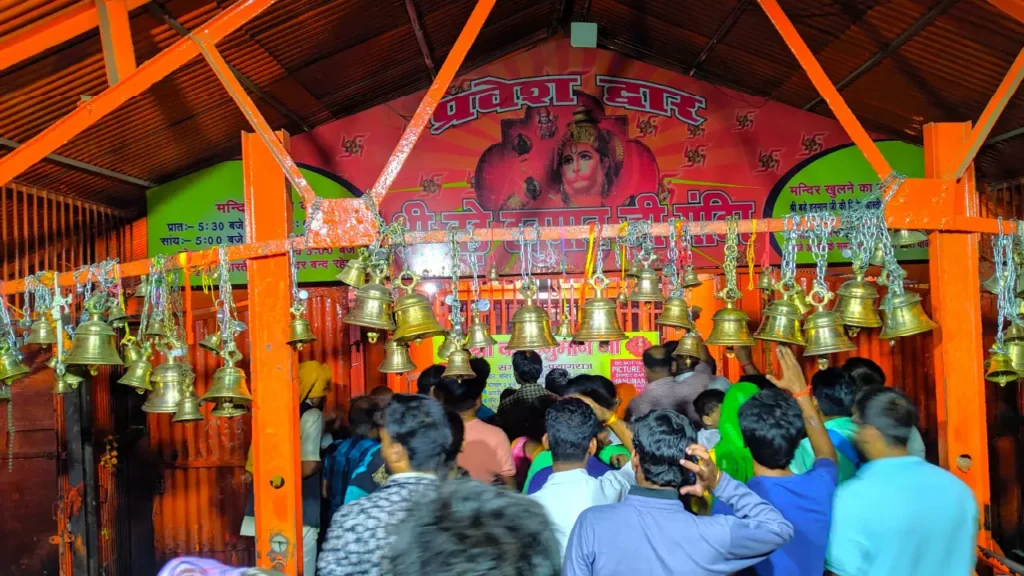
The Lete Hue Hanuman Ji Temple at the Sangam in Prayagraj is home to one of the most unusual and powerful representations of Lord Hanuman in India. Here, unlike virtually every other Hanuman temple where the deity stands upright in his warrior aspect or sits in a posture of devotion, Hanuman Ji lies in a reclining posture (lete hue — literally “lying down”) — at once suggesting the ease and power of a deity who has completed all tasks, who has carried mountains and crossed oceans, and who now rests with absolute confidence in the shelter of Lord Rama’s love.
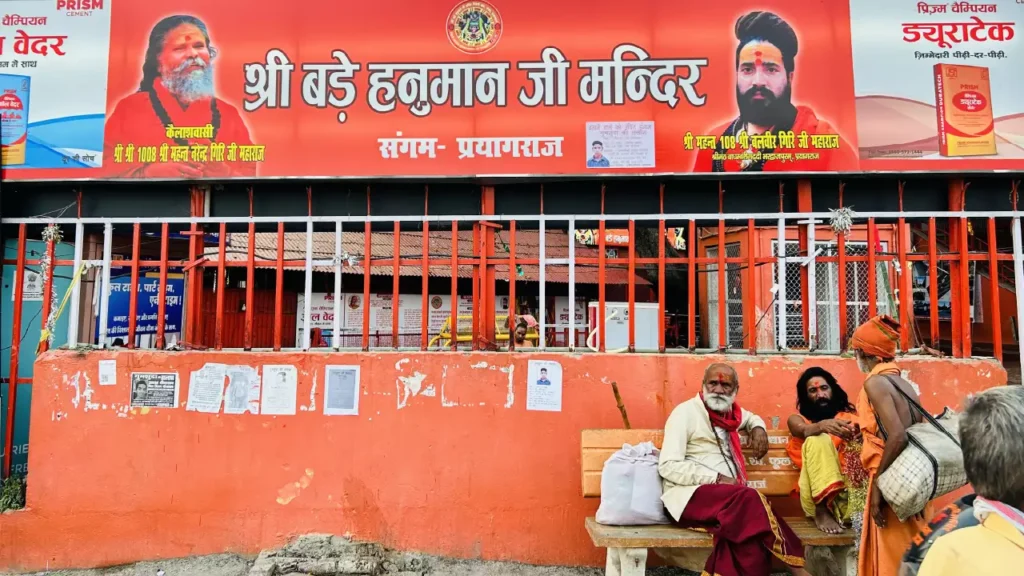
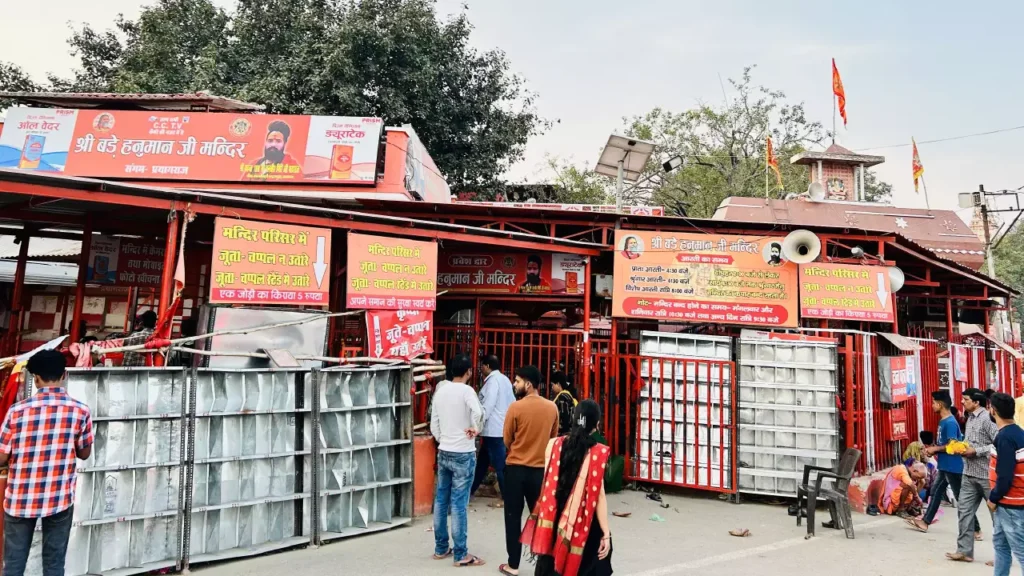
The temple is located at the Sangam Ghat area, right at the confluence of the Ganga and Yamuna rivers, making it one of the most sacred spots in all of Prayagraj. This location is not incidental. Hanuman, as the devoted servant of Lord Rama, guards the Sangam — the holiest tirtha in the Hindu sacred geography — ensuring that all pilgrims who come to take a dip here do so under his protection. The reclining form suggests he is always present, always watching, even in repose.
The Sacred Image: Black Granite and Sindoor
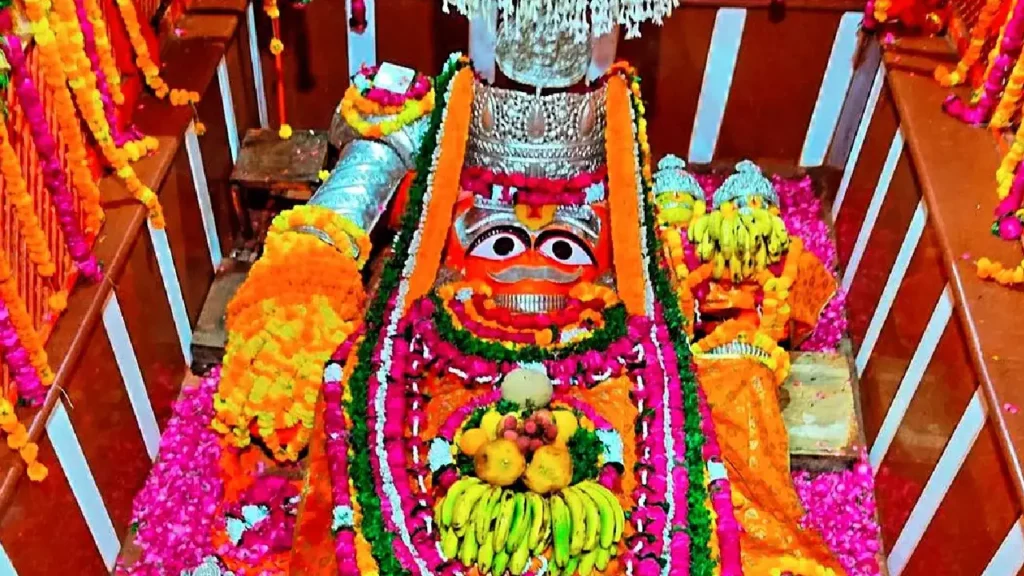
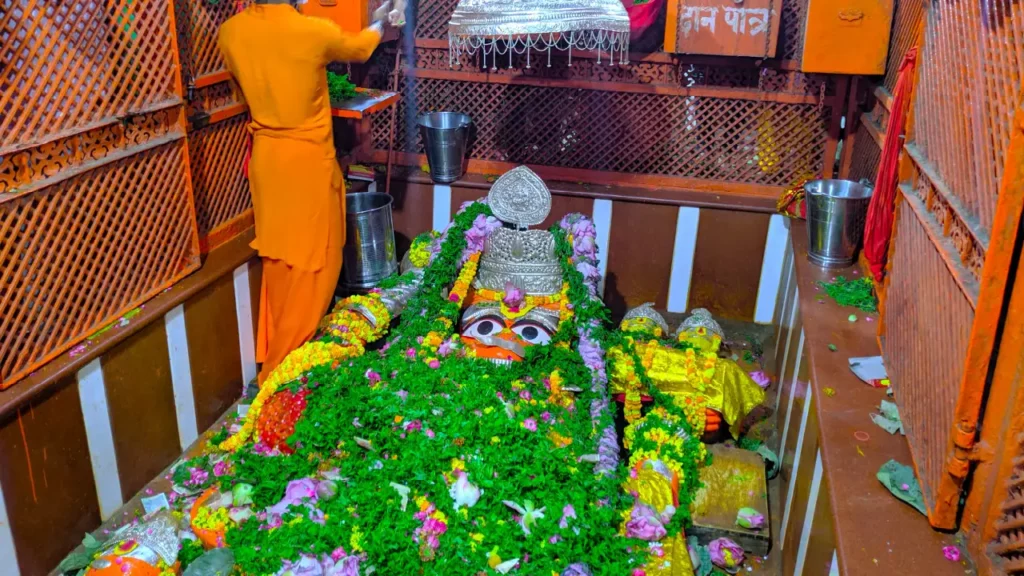
The presiding murti of Lord Hanuman is a large reclining figure carved from black granite. The original stone image has been entirely covered in layers of sindoor (vermilion powder), applied by generations of devotees over centuries, giving the deity a deep red-orange appearance that has become his defining visual identity at this temple. This covering of sindoor is itself a devotional act with deep theological roots: it was Hanuman who first smeared sindoor over his entire body when he learned that Sita applied it to her hair for the long life of Lord Rama — and Hanuman, wishing to multiply this devotion, covered himself entirely. This is why sindoor is the most sacred offering at Hanuman temples, and why this ancient murti has accumulated such a deep, continuous coat of it over the centuries.
The scale of the image is impressive — the reclining figure stretches over 20 feet in length, and the inner sanctum that houses it is built low to accommodate the deity’s horizontal posture. Devotees must often duck as they approach the deity for close darshan, creating an intimate physical lowering of oneself before Hanuman that many describe as adding to the emotional intensity of the encounter.
The Annual Flood: A Miracle of Faith
One of the most remarkable phenomena associated with this temple occurs every year during the monsoon season (July-September), when the Ganga and Yamuna rise due to rainfall and snowmelt from the Himalayas. In years of high flood, the Sangam area is submerged, and the Lete Hue Hanuman temple is no exception — the river waters rise and the reclining deity is partially or fully submerged under the flood. Rather than being a catastrophe, this submersion is considered a divine act of worship: the Ganga herself comes to bathe Hanuman Ji, offering him the most sacred abhishek of all. Devotees and priests see the flood as the Ganga’s annual pilgrimage to pay respects to the guardian of the Sangam.
When the waters recede, the temple is cleaned, the deity is re-adorned with sindoor and flowers, and a special puja is performed to mark Hanuman’s re-emergence. This annual cycle of submersion and re-emergence has been observed for centuries and is among the most talked-about phenomena in Prayagraj’s religious life.
Tuesdays and Kumbh Mela
Tuesday is the most sacred day of the week for Hanuman worship, and the Lete Hue Hanuman Ji Temple sees its largest regular crowds on Tuesdays. Devotees bring offerings of sindoor, oil lamps, and laddoos (the sweet most associated with Hanuman). Many also bring black sesame seeds and mustard oil — offerings associated with the removal of Saturn’s affliction, which Hanuman is believed to mitigate. The queues on Tuesdays can stretch for hundreds of metres outside the temple gates.
During the Kumbh Mela and Ardh Kumbh Mela, the temple becomes a focal point for millions of pilgrims who combine their Sangam dip with a visit to Lete Hue Hanuman Ji. The proximity to the Sangam makes this one of the most naturally integrated stops on the Kumbh pilgrimage circuit. Extended darshan hours, special aartis, and elevated security arrangements are put in place during these massive events.
Chalisa and Daily Worship
The Hanuman Chalisa — the forty-verse hymn composed by Tulsidas and recited by hundreds of millions of Hindus daily — is particularly associated with Prayagraj, where Tulsidas spent significant time. Reciting the Hanuman Chalisa before the reclining deity here is considered especially meritorious. Many devotees come specifically to recite the full Chalisa in the presence of the reclining Hanuman, a practice they believe multiplies the ordinary merit of the recitation many times over.
Daily worship follows the standard five-aarti schedule, beginning with Mangala Aarti at approximately 5:00 AM. The temple is managed by the Prayagraj district administration and the relevant temple trust, and entry is free of charge.
How to Reach
The temple is located at the Sangam Ghat area, approximately 7 kilometres from Prayagraj Junction. Auto-rickshaws and boats are available from the city centre; pilgrims often reach the Sangam by boat from the Allahabad Fort ghat and walk to the temple. During Kumbh Mela, the area is served by special shuttle buses and pedestrian routes from all major approach roads. The temple is open throughout the day, with extended hours on Tuesdays and during festivals.
Visit Lete Hue Hanuman Ji Temple and explore the full spiritual circuit of the Triveni Sangam area with our Prayagraj pilgrimage and travel guide. This temple is a key stop on our Varanasi-Prayagraj 2N/3D tour package.