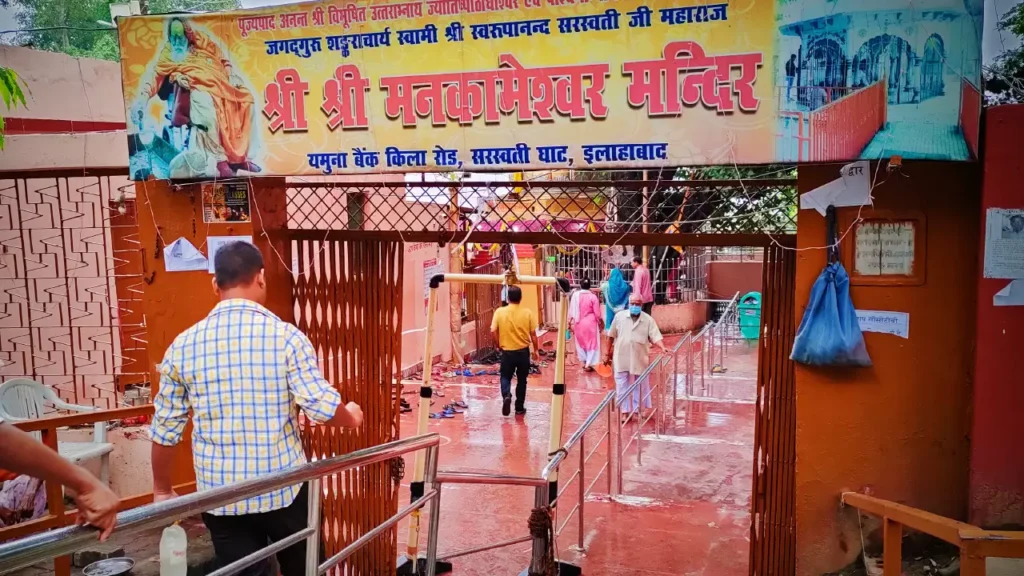
Mankameshwar Temple in Prayagraj is one of the most ancient and revered Shiva temples in the city, perched on the western bank of the Yamuna River in the cantonment area near Saraswati Ghat. The name carries its meaning directly: “Mankameshwar” is a compound of “manka” (of the heart/mind, from the Sanskrit “manas”), “kam” (desire or wish), and “Ishwar” (God or Lord) — making this the temple of Lord Shiva who fulfils the desires of the heart. Devotees have come here for centuries to pray for what they hold most dear: the recovery of a sick child, the success of a son’s education, the blessing of a new marriage.
The temple is listed among the ancient Shiva tirthas of Prayag in classical pilgrimage texts, and its position beside the Yamuna — rather than the Ganga — gives it a distinct character. The Yamuna is associated with Yama (the god of death and time) as well as with Lord Krishna, and a Shiva temple on its banks represents a powerful convergence of the Shaiva and Vaishnava traditions that has characterised Prayagraj’s religious life for millennia.
The Shivlinga and the Temple Structure
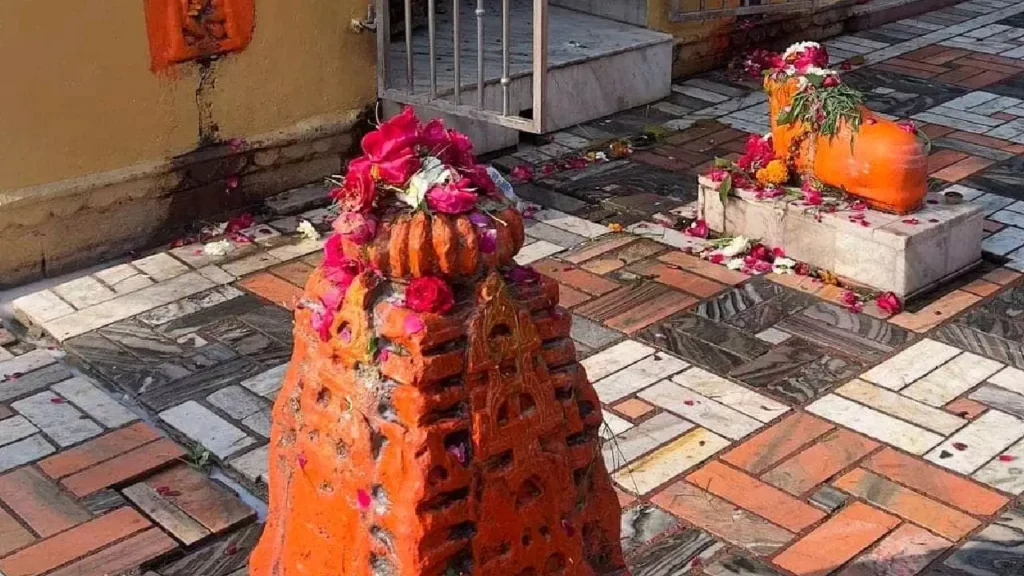
The presiding deity is an ancient Shivlinga — believed by local tradition to be self-manifested (swayambhu) rather than installed by human hands. A swayambhu linga is considered especially powerful, as it represents Shiva’s spontaneous, unconditioned manifestation in the world rather than a human construction. The linga is worshipped with daily abhishek (ritual bathing) with water from the Yamuna, milk, honey, and bilva leaves — the traditional offerings to Shiva.
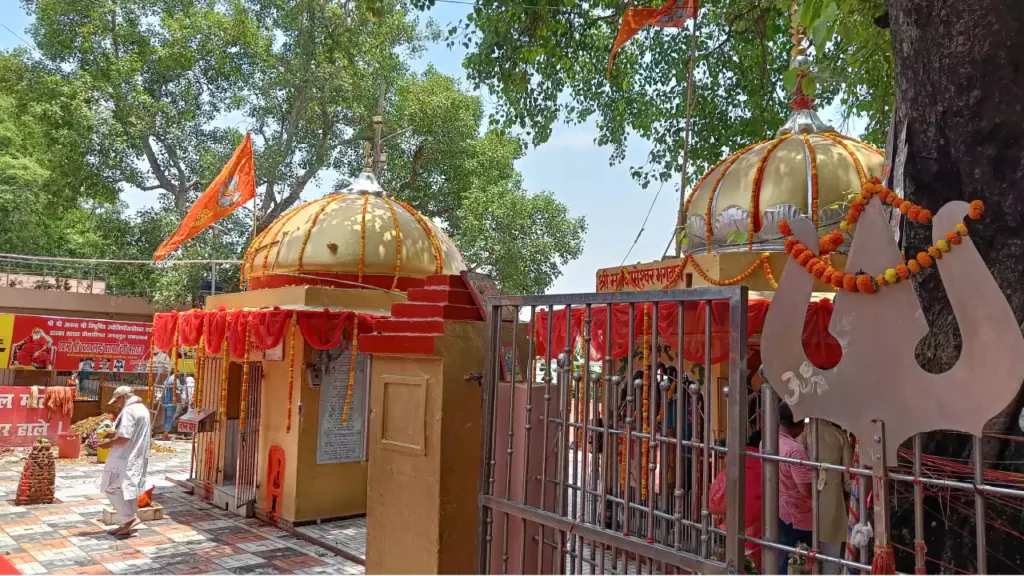
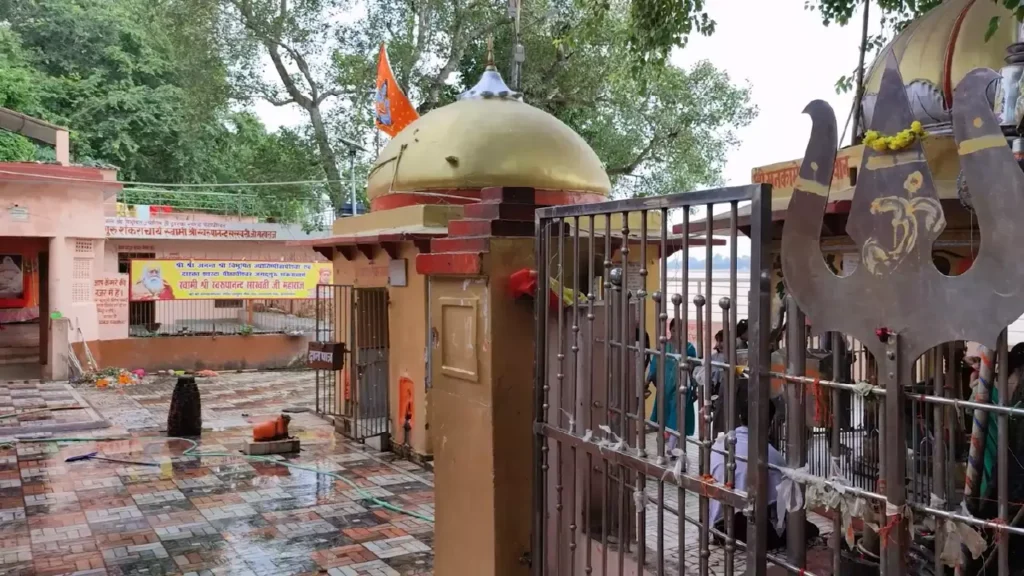
The temple structure itself is built in a relatively simple style, with a low shikara and a small inner courtyard. Unlike the grand marble temples of the BHU campus or the ornate spires of the old city shrines, Mankameshwar Temple has the quality of deep antiquity — worn stone, heavily garlanded idols, the smell of centuries of incense layered into the walls. This is a temple that has been used, loved, and prayed in by ordinary people for a very long time.
The Saraswati Ghat immediately adjacent to the temple adds to the sanctity of the location. The ghat is considered one of the ghats where the mythical Saraswati river is said to flow invisibly into the Yamuna, making this a minor meeting point of sacred waters.
Monday and Shivratri: The Temple’s Biggest Days
Monday (Somvar) is the most sacred day of the week for Shiva devotees, as Shiva is identified with the moon (Soma) and Monday is his day. At Mankameshwar Temple, every Monday sees a significant increase in visitors — locals from the cantonment area, students from nearby schools and colleges, and devotees from across the city who make a weekly Monday vow to Shiva. It is common to see long queues for abhishek on Monday mornings, with devotees holding vessels of Yamuna water or milk they have brought for the ritual.
Mahashivratri — the Great Night of Shiva, falling in February-March — is the temple’s single most important festival. On this night, Shiva is believed to have performed the cosmic dance (Tandava) that sustains the universe, and to have manifested as the infinite Jyotirlinga. All-night worship is performed, with aarti at midnight and again at dawn. Special alankara (decoration) of the Shivlinga is performed for each prahara (three-hour watch) of the night. Tens of thousands of devotees visit the temple during the Shivratri period, and temporary stalls selling bel patra, flowers, and worship materials line the approach roads.
Sawan Maas: The Holy Month
The month of Sawan (Shravan, roughly July-August) is intensely sacred to Shiva, and Mankameshwar Temple sees heightened activity throughout this period. Kanwariyas — orange-clad devotees who carry Ganga water on bamboo yokes, walking barefoot from Haridwar or Garhmukteshwar to their home Shiva temples — complete their journeys here during Sawan. The sight of hundreds of Kanwariyas arriving at the temple to pour their hard-carried Ganga water over the Shivlinga is one of the most moving spectacles in Prayagraj’s annual religious calendar.
Each Monday of Sawan is observed with particular intensity. The queues for abhishek on Sawan Mondays can stretch for hundreds of metres, with waits of several hours that devotees endure cheerfully as a form of tapas (austerity) and devotion.
The Yamuna Riverbank Setting
One of the undeniable attractions of Mankameshwar Temple is its setting. The Yamuna flows just a few metres from the temple compound, and the ghat in front of the temple provides a quiet vantage point for watching the river and the boats that cross it. The cantonment area, with its wide roads, old trees, and relatively less crowded character compared to the old city, makes this part of Prayagraj peaceful and easy to navigate. Sunrise visits to the temple, with the first light catching the river surface and the sound of morning aarti bells carrying over the water, are considered particularly beautiful.
How to Reach
The temple is located near Saraswati Ghat in the cantonment area of Prayagraj, approximately 5 kilometres from Prayagraj Junction. Auto-rickshaws and city buses serve this area. The Yamuna riverfront is accessible from the temple, and the Sangam Ghat is approximately 6 kilometres further along the river. The temple is open from 5:00 AM to 12:00 PM and from 4:00 PM to 9:00 PM daily.
Discover the Shiva temples and sacred waterfront of Prayagraj with our Prayagraj pilgrimage and travel guide. Visit Mankameshwar, the Sangam, and the city’s other major temples on our Varanasi-Prayagraj 2N/3D tour package.