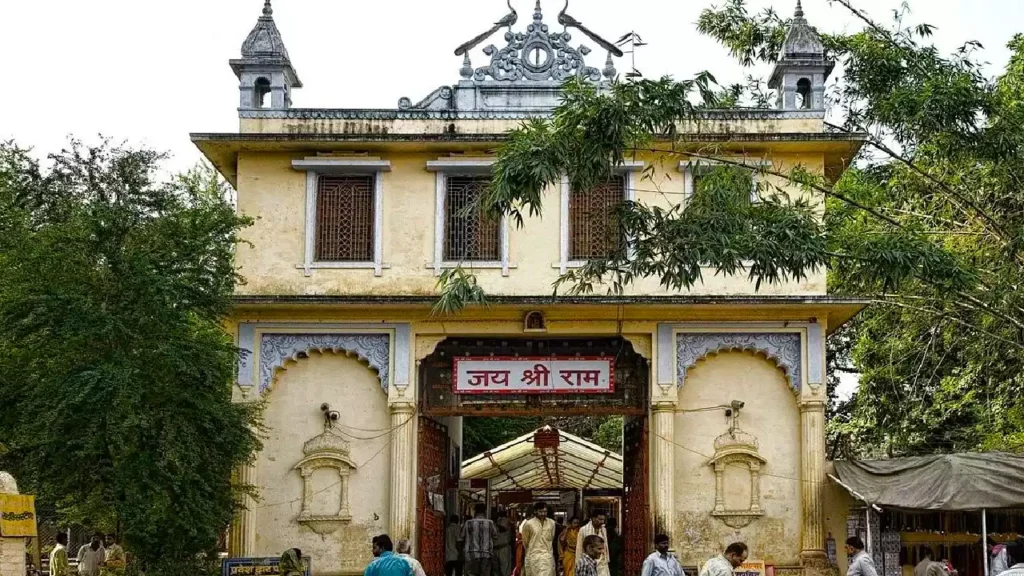
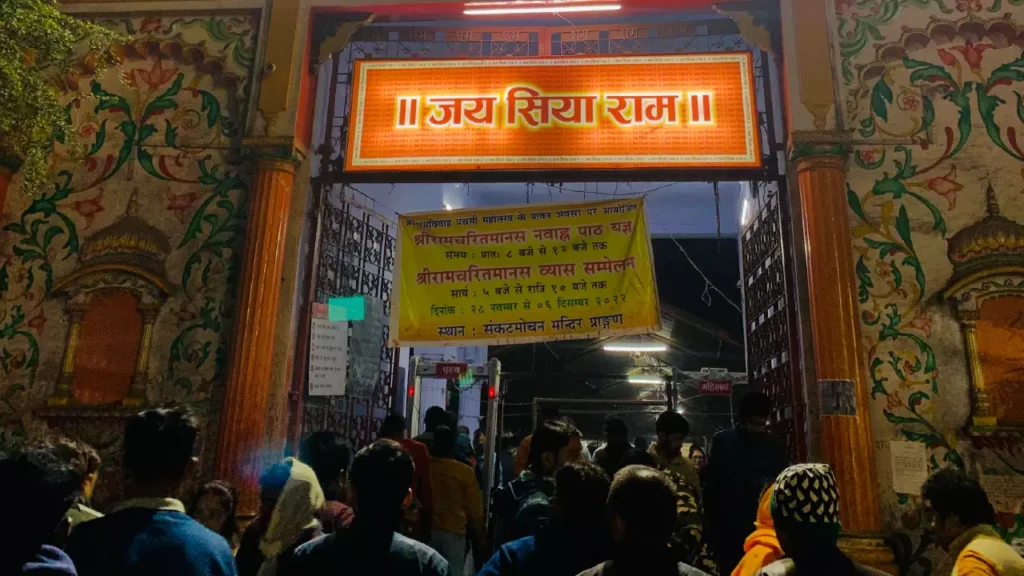
Sankat Mochan Hanuman Temple is one of Varanasi’s most beloved and spiritually potent shrines — a place where thousands of devotees arrive daily to seek relief from suffering, obstacles, and fear. The temple’s very name captures its essence: “sankat” means distress or crisis, and “mochan” means one who liberates. To visit this temple is to come before Hanuman in his most compassionate form — the remover of all suffering.
Located near Assi Ghat, in a quiet grove that feels remarkably serene for a city as intense as Varanasi, the temple was founded in the early 16th century by the poet-saint Goswami Tulsidas. The saint, who composed the immortal Ramcharitmanas — the popular retelling of the Ramayana in Awadhi — is said to have experienced a direct vision of Lord Hanuman at this very spot, receiving the divine blessing that enabled him to complete his life’s masterwork.
The Legend of Tulsidas and Hanuman’s Vision
The founding of Sankat Mochan Temple is deeply intertwined with the life and spiritual journey of Tulsidas. According to tradition, Tulsidas prayed with great intensity at this grove for a vision of Lord Hanuman. Hanuman, pleased by his devotion, first appeared to the saint in disguise — as an old leper — and later revealed his true divine form. Tulsidas installed the deity here and declared the grove a place of perpetual protection, where those burdened by sorrow, illness, or adversity could come and find relief.
This founding story has shaped the temple’s enduring identity. Unlike many Varanasi temples that attract pilgrims seeking moksha (liberation from the cycle of birth and death), Sankat Mochan is most often visited by people in the midst of earthly difficulty — seeking relief from disease, financial hardship, family disputes, and personal crises. Hanuman’s compassion, his role as the eternal servant of Lord Rama, and his legendary strength all converge here in a deeply personal form of worship.
Architecture and the Compound
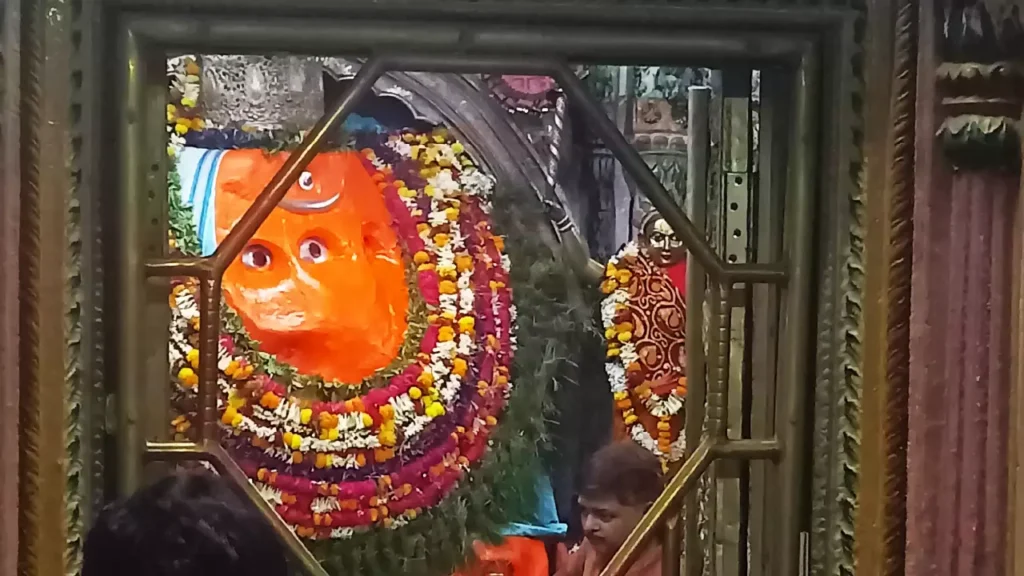
The temple complex is spread across a leafy compound that includes the main Hanuman shrine, a separate Ram Darbar (shrine for Lord Rama, Sita, and Lakshmana), and a large courtyard where devotees sit and sing devotional music. The architecture is relatively modest compared to some of Varanasi’s more ornate temples — the emphasis here is less on grandeur and more on atmosphere. The inner sanctum houses the murti (sacred image) of Hanuman, which is coated in sindoor and adorned with a flower garland. The image shows Hanuman in a powerful, standing form.
The compound is known for its resident monkeys — rhesus macaques who live freely in the trees and on the walls. While they can be mischievous, they are considered sacred within temple precincts associated with Hanuman, and no harm is done to them.
The Sankat Mochan Sangeet Samaroh
One of the most celebrated annual events at this temple is the Sankat Mochan Sangeet Samaroh — a classical music festival held every year during the Hanuman Jayanti period (typically April or May). Founded by Pandit Veer Bhadra Mishra, a former mahant of the temple and a renowned Ganges activist, the festival has grown into one of India’s premier classical music events. For five consecutive nights, maestros of Hindustani classical music perform at the temple, drawing audiences from across the country. The combination of sacred setting, the sound of the flowing Ganga nearby, and the genius of classical ragas creates an experience that devotees describe as profoundly moving.
Darshan Timings and Rituals
The temple is open from approximately 5:00 AM to 12:00 PM and from 4:00 PM to 10:30 PM daily. Tuesdays and Saturdays are particularly sacred to Hanuman, and these days see dramatically higher footfall — it is not unusual to find queues stretching outside the gate. The Mangala Aarti at dawn is held in a quiet, contemplative atmosphere, while the evening Shringar Aarti is more celebratory and attended by larger crowds. Special abhishek (ritual bathing of the deity) is performed on Tuesdays.
Spiritual Significance in the Kashi Panch Kosi
Sankat Mochan Temple is one of the key stops on the Panchakoshi Parikrama — the ancient 84-kilometre circumambulation route around the sacred boundary of Varanasi. This parikrama, traditionally completed over five days, takes pilgrims through the full sacred geography of Kashi. Hanuman’s presence on this route is significant: he is considered the gatekeeper of sacred space, the one who ensures pilgrims complete their journey safely and that no obstacles arise.
Beyond the parikrama, the temple holds a special place in the daily devotional life of Varanasi residents. Many begin their day here before proceeding to work, offering a brief prayer and receiving prasad (typically a sweet laddoo) before setting out — a custom that has been maintained for generations.
How to Reach
The temple is located in the Sankatmochan area of Varanasi, close to Assi Ghat and the BHU campus. It is easily accessible by auto-rickshaw from Varanasi Junction (approx. 30 minutes) or from Godaulia (approx. 20 minutes). The Assi Ghat area has several dharamshalas and guesthouses for pilgrims who wish to stay nearby.
Plan your visit to Sankat Mochan Temple and the rest of Varanasi’s sacred circuit with our Varanasi travel and pilgrimage guide. This temple is included in our Varanasi 2N/3D tour package, which covers key temples, ghats, and an evening Ganga Aarti experience.