Tulsi Manas Temple in Varanasi is a temple where architecture, literature, and devotion meet in an unusual and deeply moving way. Dedicated to Lord Rama, the temple was built on the very spot in Varanasi where the saint-poet Goswami Tulsidas is believed to have composed the Ramcharitmanas — the most widely read and recited scripture in the Hindi-speaking world. For hundreds of millions of Hindus, the Ramcharitmanas is not merely a literary text but a sacred scripture equal in reverence to the Vedas, and this temple stands as a monument to both the poet and his eternal gift to the world.
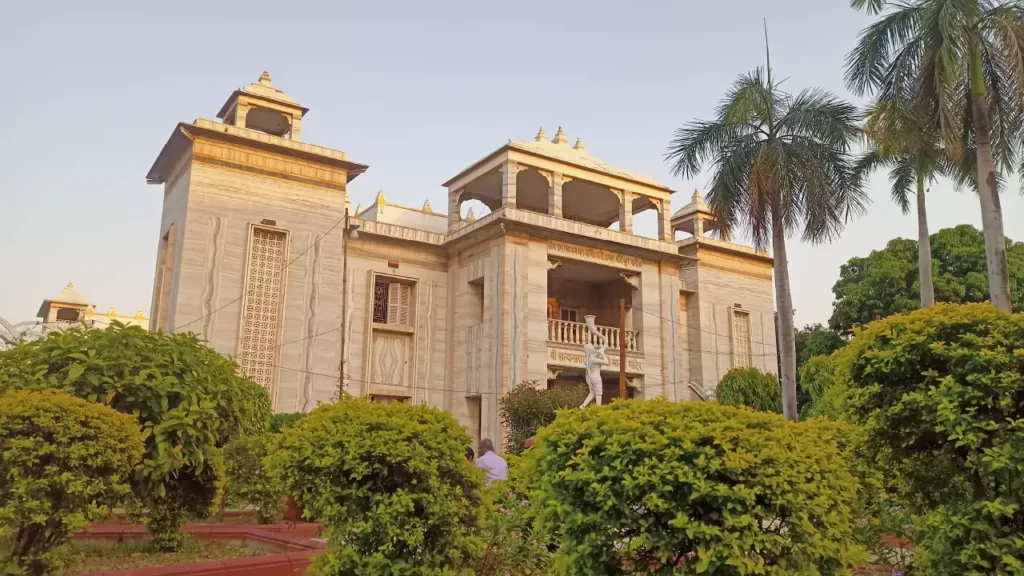
Located near Durga Kund in the Shivala area of Varanasi, Tulsi Manas Temple was constructed in 1964 in white Rajasthani marble, funded by the Birla family — one of India’s foremost industrial dynasties, who have also built the famous Birla Mandir temples in Delhi, Hyderabad, and Kolkata. The marble gleams in the sun and stands in striking contrast to the ancient sandstone temples that surround it, making it immediately recognisable.
The Ramcharitmanas and Tulsidas
Goswami Tulsidas (1532-1623 CE) is one of the most revered poet-saints in Indian history. Born in Rajpur in present-day Uttar Pradesh, he spent much of his life in Varanasi, where he is said to have composed the Ramcharitmanas between 1574 and 1576 CE. The text retells the story of Lord Rama — his birth, his fourteen years of exile, his search for Sita, the war against Ravana, and his return to Ayodhya — in the Awadhi dialect of Hindi, making the story accessible to ordinary people who could not read Sanskrit.
The significance of this act cannot be overstated. Before the Ramcharitmanas, the story of Rama was primarily accessible through Sanskrit texts like the Valmiki Ramayana, which most common people could not read. Tulsidas democratised the Rama story, giving it to the masses in their own tongue. The result was a text of extraordinary beauty and power that continues to be recited in homes and temples across North India to this day.
Architecture: A Living Scripture in Marble
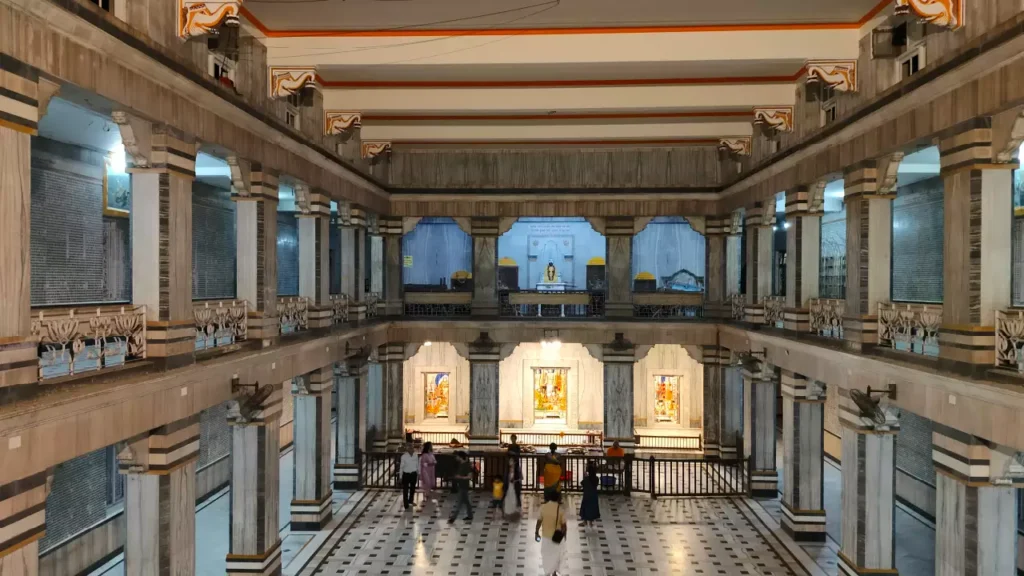
What makes Tulsi Manas Temple visually extraordinary is that the walls of the temple are inscribed with verses from the Ramcharitmanas. As you walk through the temple, you are literally surrounded by the text — the entire Ramcharitmanas is carved in the white marble, panel by panel, verse by verse. This makes the temple not just a place of worship but a vast, three-dimensional scripture that devotees can read as they circumambulate the inner sanctum.
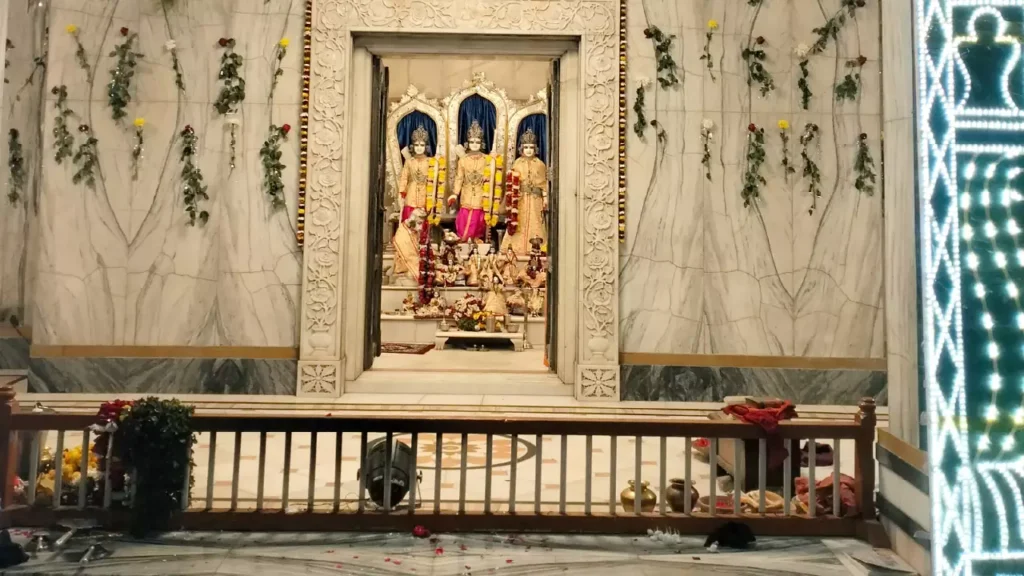
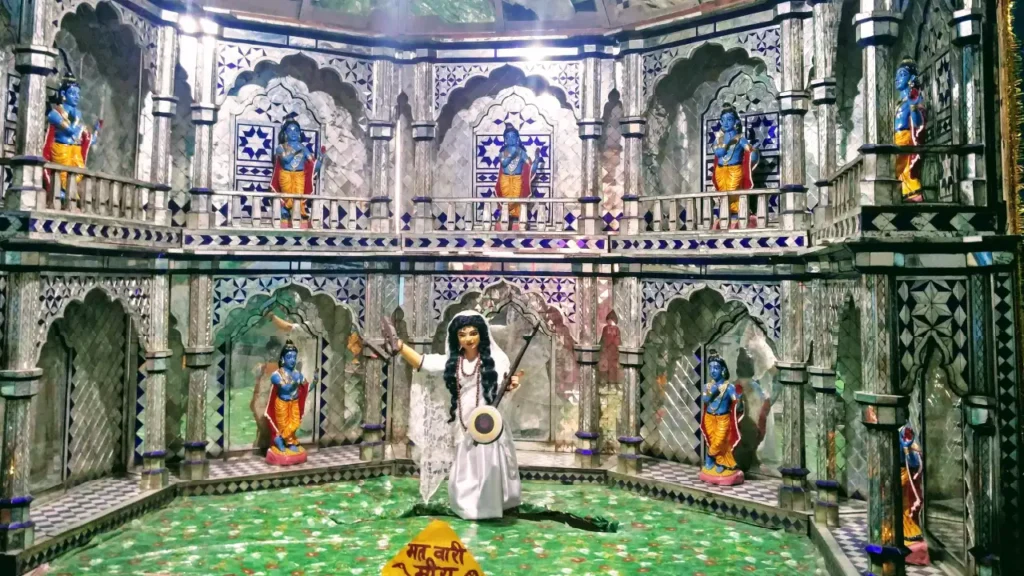
The ground floor houses the main shrine of Lord Rama, where the presiding deities are Ram, Sita, Lakshmana, and Hanuman. On the upper floor, there is a mechanical Ramayana display — a series of animated figures depicting key scenes from the Ramcharitmanas, which has been a source of wonder for generations of visiting children and families. Though the technology is now dated, the displays remain popular and serve an educational purpose for younger pilgrims.
The temple complex also includes a Sankat Mochan shrine and a smaller temple dedicated to Tulsidas himself, where his life story is depicted through paintings and inscriptions.
Darshan Timings and Daily Rituals
Tulsi Manas Temple is open from 5:30 AM to 12:00 PM and from 3:30 PM to 9:00 PM daily. Five aartis are performed each day following the standard Vaishnava schedule. The temple is particularly crowded during Ram Navami (the birthday of Lord Rama, falling in the Chaitra month, usually March-April), when special recitations of the Ramcharitmanas take place. Vivah Panchami (commemorating the marriage of Rama and Sita) and Diwali (marking Rama’s return to Ayodhya) are also observed with special celebrations.
One of the most cherished experiences at Tulsi Manas Temple is attending the evening aarti and then spending time in the compound listening to the Ramayana being recited or sung by sadhus and devotees who gather in the courtyard. The tradition of Ramayan Kirtan — group chanting of verses from the Ramcharitmanas — continues here as it has for decades.
Spiritual Significance
Varanasi holds a special place in the story of Tulsidas. He spent decades here, performed intense sadhana (spiritual practice) at sites like Assi Ghat and Prayag Ghat, and is believed to have had a direct vision of Lord Rama’s divine form in Varanasi. For Vaishnava pilgrims — particularly those devoted to Lord Rama rather than Shiva — Tulsi Manas Temple is the primary destination in Kashi. It represents the Ramayana tradition within a city more commonly associated with Shaiva worship, making it a point of beautiful convergence.
The temple also commemorates one of the most profound intellectual events in Indian literary history: the choice by Tulsidas to write in a vernacular language rather than Sanskrit. This decision, controversial in his own time, ultimately ensured that the Ramayana reached every household, every village, every woman and farmer who could not access the scholarly tradition. In this sense, the temple honours not just Rama but the democratic impulse of devotional religion itself.
How to Reach
The temple is located near Durga Kund, approximately 7 kilometres from Varanasi Junction. It is adjacent to Durga Kund Temple and within walking distance of Sankat Mochan Hanuman Temple. Auto-rickshaws are available from Godaulia Chowk (approx. 20 minutes) and from Varanasi Junction (approx. 30 minutes). The Lanka-BHU road is the main access route to this part of Varanasi, with multiple auto-rickshaw routes connecting it to the rest of the city.
Discover the Ramayana heritage of Varanasi and plan your pilgrimage with our Varanasi pilgrimage and travel guide. Tulsi Manas Temple is included in our Varanasi 2N/3D tour package — perfect for Rama devotees and those who wish to trace the literary legacy of Tulsidas.