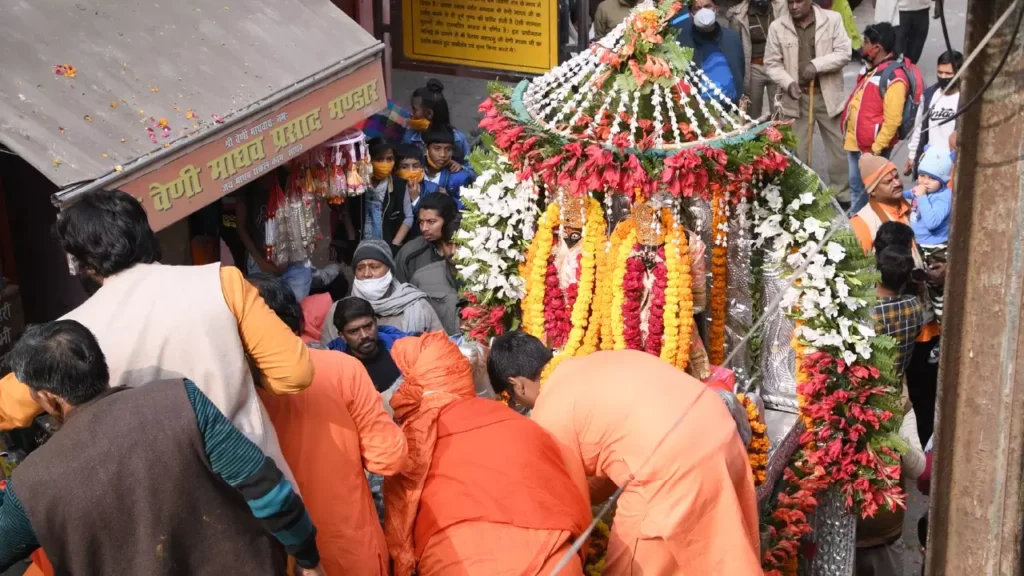
Veni Madhav Temple in Prayagraj is one of the fourteen Madhav shrines of Kashi — a sacred network of Vishnu temples distributed across the pilgrimage circuit of the holy city. While most of the fourteen Madhav shrines are located in Varanasi, Veni Madhav has his seat here in Prayagraj, at the Triveni Sangam, making him the presiding Vishnu deity of Prayag. Among the four principal deities of Prayagraj — Veni Madhav, Alopi Devi, Mankameshwar, and Someshwar — Veni Madhav holds the highest place of honour as the lord of the Triveni Sangam itself.
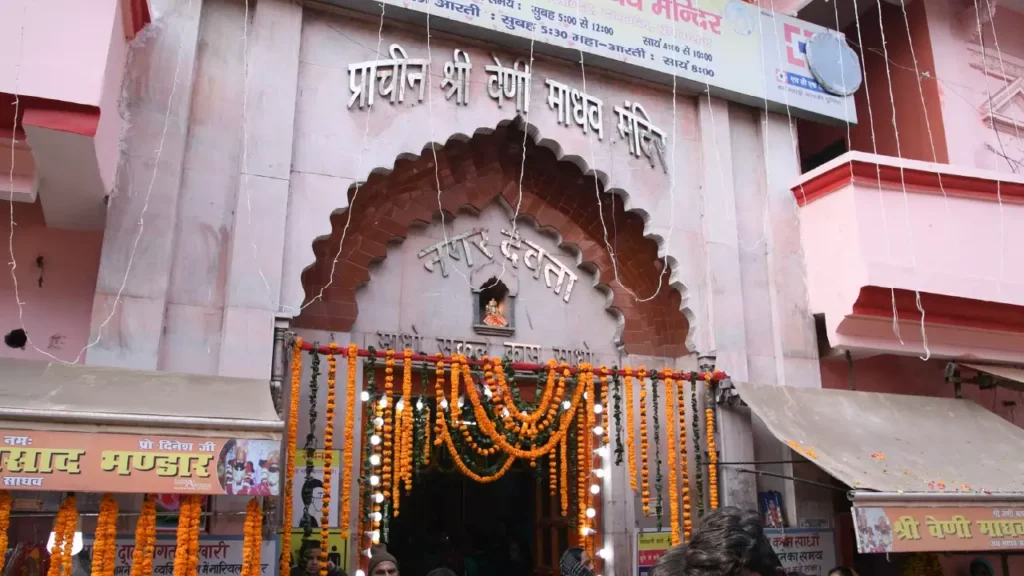
The temple is situated in the Daraganj area of Prayagraj, close to the Triveni Sangam and the Sangam Ghat. Its location near the confluence of the Ganga and Yamuna makes it a natural stopping point for pilgrims who have taken their holy dip at the Sangam and now seek the blessings of the presiding deity before completing their tirth (pilgrimage) to Prayag.
The Fourteen Madhav Shrines of Kashi
To understand Veni Madhav Temple fully, it is necessary to understand the theological system of the Chaturdasha Madhav (Fourteen Madhavs). In the Kashi Khanda (a section of the Skanda Purana dedicated to the sacred geography of Varanasi), fourteen forms of Vishnu-as-Madhava are described as dwelling in specific locations across the pilgrimage circuit of Kashi. Each Madhav has a specific name, specific powers, and specific benefits that accrue to devotees who visit him. Together, the fourteen Madhavs represent the complete presence of Vishnu in the sacred geography of the Kashi-Prayag region.
Veni Madhav is particularly significant because “Veni” refers to the braid or plait of hair — specifically the confluence (veni/sangam) of rivers, which looks like the plaited hair of a woman. Veni Madhav is thus the Vishnu who presides over the holy confluence, making him the divine lord of the Triveni Sangam in a direct, etymological sense. His presence at Prayagraj rather than at Varanasi proper reflects the ancient understanding that Prayag was not a separate pilgrimage site but an extension of the sacred zone of Kashi.
Architecture and the Temple Complex
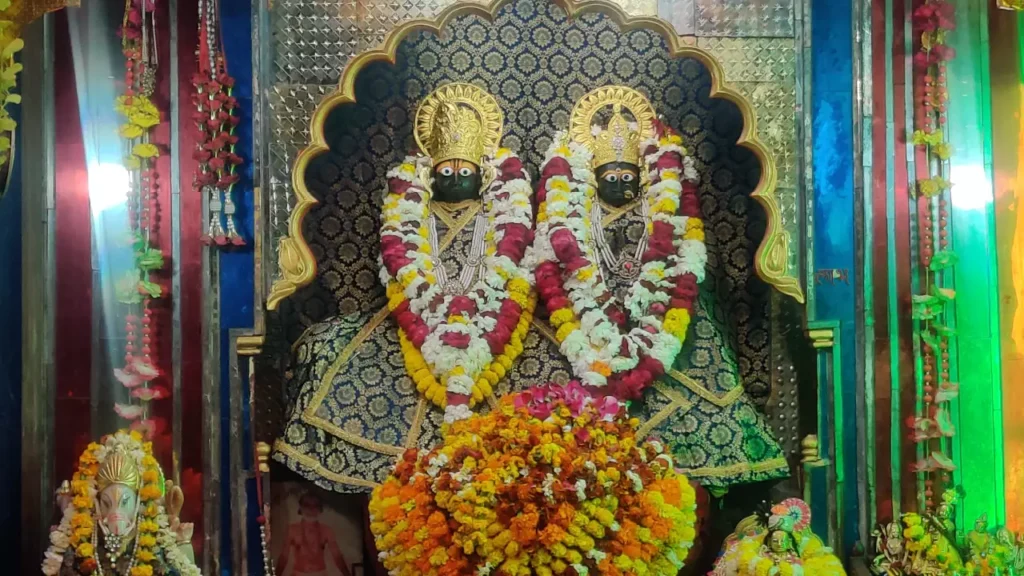
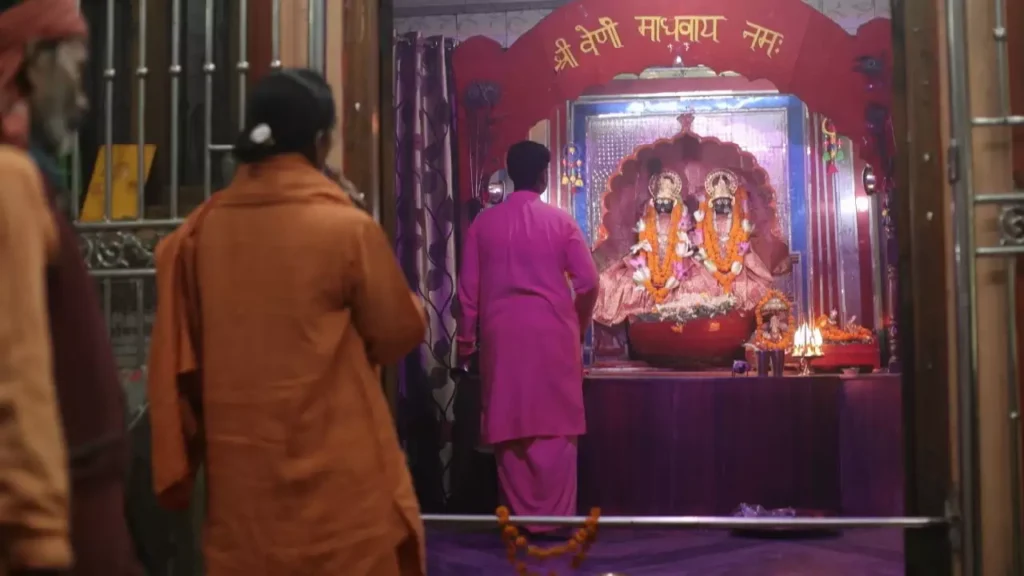
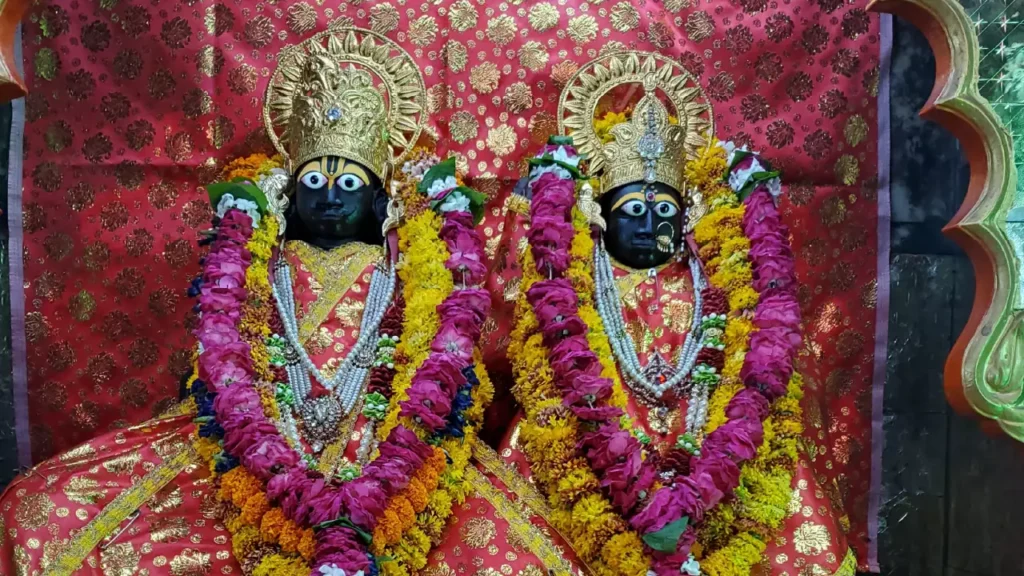
The current temple structure is of relatively modest scale but high sanctity. The inner sanctum houses the deity of Veni Madhav — a form of Vishnu in his Chaturbhuja (four-armed) aspect, holding the conch, discus, lotus, and mace. The image is adorned daily with fresh flowers, tulsi (basil) garlands, and silken garments. The temple follows the Vaishnava tradition of panchopachar puja — a five-element ritual of worship involving fragrance, flowers, incense, lamp, and food offering.
The temple compound also includes a smaller shrine for Goddess Lakshmi and a sacred kund (tank) where pilgrims may perform ritual bathing. The kund is considered holy particularly during Kartik (October-November), when a ritual bath here is believed to give the merit of bathing at all the Vishnu tirthas simultaneously.
Role in Prayagraj Pilgrimage
No pilgrimage to Prayagraj is considered complete without a visit to Veni Madhav Temple. Classical pilgrimage texts prescribe a specific sequence for the Prayag tirth: take a dip at the Triveni Sangam, then visit Veni Madhav, then the Akshayavat (the undying fig tree within the Patalpuri complex), and finally Alopi Devi. This sequence has been followed by pilgrims for over a thousand years and continues to be observed by devout visitors today, including millions who come for the Kumbh Mela and Ardh Kumbh Mela.
During Kumbh and Ardh Kumbh, the footfall at Veni Madhav Temple increases dramatically. The temple manages extended darshan hours during these periods, often staying open through the night during the Amrit Snan (royal bath) dates, when the largest crowds converge on Prayagraj from across the country.
Festivals and Observances
Ekadashi (the eleventh day of each lunar fortnight) is the most important weekly observance at Veni Madhav, as Ekadashi is universally sacred to Vishnu. Devotees fast from grain on Ekadashi and spend the day in worship, kirtan, and scripture reading. The Ekadashi darshan at Veni Madhav draws devotees from across Prayagraj and from the surrounding villages and towns.
Vaikuntha Ekadashi — the most sacred of all Ekadashis, falling in Margashirsha (December) — is the temple’s single biggest event of the year. Kartik month is also particularly active, with daily diyas (lamps) lit on the Ganga and at the temple throughout the month. Dev Deepawali, falling on Kartik Purnima, is observed with a special illumination ceremony.
How to Reach
The temple is located in the Daraganj neighbourhood of Prayagraj, approximately 4 kilometres from Prayagraj Junction. Auto-rickshaws and tempos run regularly between the city centre and Daraganj. The Sangam area is a 5-10 minute walk from the temple. The Veni Madhav Ghat on the Yamuna is immediately adjacent to the temple and makes for a peaceful addition to the visit.
Discover the full pilgrimage circuit of Prayagraj — from the Triveni Sangam to Veni Madhav and beyond — with our Prayagraj pilgrimage and travel guide. Visit all the major temples and the Sangam on our Varanasi-Prayagraj 2N/3D tour package.